astroz
Astrodynamics and Spacecraft Toolkit. Features fast orbit prop, celestial precession, CCSDS parsing, RF parsing, fits i…
 ATTron
Astronomical and Spacecraft Toolkit Written in Zig
Featuring the fastest CPU based open source SGP4/SDP4 propagator
| Orbital Mechanics | Spacecraft Ops | Astronomy |
|---|---|---|
| SGP4/SDP4 propagation | CCSDS packets | FITS parsing |
| TLE & OMM parsing | VITA49 packets | WCS coordinates |
| Orbital maneuvers | Attitude determination | Star precession |
| Force models (J2-J4, drag, SRP, third-body) | CSPICE ephemeris | Celestial bodies |
| Dormand-Prince 8(7) integrator | Monte Carlo sims |
Performance
Sub-meter accuracy validated against reference implementations. Automatically dispatches between SGP4 (near-earth) and SDP4 (deep-space) based on orbital period. Uses SIMD (AVX512/AVX2) to process 8 satellites simultaneously, with multithreaded constellation propagation across all available cores.
Single-Threaded (1.2M propagations, single satellite)
| Implementation | Props/sec | Speedup vs python-sgp4 |
|---|---|---|
| astroz | 30.8M | 11x |
| Rust sgp4 | 5.1M | 1.8x |
| heyoka | 3.8M | 1.3x |
| satkit | 3.5M | 1.2x |
| python-sgp4 | 2.8M | 1x |
Multi-Threaded Constellation (13,478 satellites × 1,440 times)
| Implementation | 1 Thread | 16 Threads |
|---|---|---|
| astroz | 37.7M/s | 303M/s |
| heyoka | 15.7M/s | 155.6M/s |
| Rust sgp4 (rayon) | 4.4M/s | 47.9M/s |
| satkit | 3.5M/s | 3.5M/s |
| python-sgp4 | 2.7M/s | 2.7M/s |
Benchmarked on AMD Ryzen 7 7840U (16 threads). All implementations using their optimal configurations (SIMD, pre-allocated outputs, batch mode).
Uses SIMD (AVX512 for 8-wide, AVX2/SSE for 4-wide) with multithreaded time-major iteration. Validated against Vallado AIAA 2006-6753 reference vectors (< 10m position error, < 1µm/s velocity error). Set ASTROZ_THREADS environment variable to control thread count (defaults to all available cores).
The Cesium visualization example propagates the entire active satellite catalog (~13,000 satellites) at interactive rates. Try the live demo →
Validated Accuracy
Force models and propagators are validated against reference implementations:
| Component | Reference | Tolerance |
|---|---|---|
| SGP4/SDP4 propagation | python-sgp4 | < 100m position |
| J2 RAAN drift | Vallado analytical | < 1% |
| Hohmann transfer ΔV | poliastro | < 0.1% |
| Orbital periods | Analytical | 1e-10 relative |
| Two-body energy | Conservation law | 1e-10 over 100 orbits |
Run validation tests: zig build test
With CSPICE enabled (for high-precision ephemeris): zig build test -Denable-cspice=true
Python
Only supports Linux x86_64 and macOS ARM64 (Python 3.10–3.14):
pip install astroz
python-sgp4 Compatible API (Recommended)
Drop-in replacement for python-sgp4 with transparent deep-space (SDP4) support. Just change the import for instant speedup:
# Before                                    # After
from sgp4.api import Satrec, jday      →    from astroz.api import Satrec, jday
| Your Code | python-sgp4 | astroz | Speedup |
|---|---|---|---|
sat.sgp4() loop |
1.3M/s | 2.5M/s | 2x |
sat.sgp4_array() |
2.7M/s | 15M/s | 5x |
SatrecArray.sgp4() |
3M/s | 290M/s | 100x |
See migration guide for optimization tips.
from astroz.api import Satrec, SatrecArray, jday, WGS72
import numpy as np

# Single satellite (same syntax as python-sgp4)
line1 = "1 25544U 98067A   24127.82853009  .00015698  00000+0  27310-3 0  9995"
line2 = "2 25544  51.6393 160.4574 0003580 140.6673 205.7250 15.50957674452123"
sat = Satrec.twoline2rv(line1, line2, WGS72)

jd, fr = jday(2024, 5, 6, 12, 0, 0.0)
error, position, velocity = sat.sgp4(jd, fr)

# Batch propagation (270-330M props/sec with SIMD)
sat_array = SatrecArray([sat1, sat2, ...])  # List of Satrec objects

# Single time point (scalars)
e, r, v = sat_array.sgp4(2460000.5, 0.5)

# Multiple time points (arrays)
jd = np.full(1440, 2460000.5)
fr = np.linspace(0, 1, 1440)
e, r, v = sat_array.sgp4(jd, fr)  # (n_sats, n_times, 3)

# Skip velocities for 30% faster propagation
e, r, _ = sat_array.sgp4(jd, fr, velocities=False)
High-Level API
Convenience functions for common workflows:
from astroz import propagate, Constellation
import numpy as np

# Load and propagate - automatically optimized for maximum performance
positions = propagate("starlink", np.arange(1440))  # 1 day at 1-min intervals
# shape: (1440, num_satellites, 3) in km, ECEF coordinates

# With options
from datetime import datetime, timezone
positions = propagate(
    "starlink",
    np.arange(1440),
    start_time=datetime(2024, 6, 15, tzinfo=timezone.utc),
    output="geodetic",  # "ecef" (default), "teme", or "geodetic"
)

# With velocities
positions, velocities = propagate("starlink", np.arange(1440), velocities=True)

# For repeated propagation, pre-parse to avoid overhead
c = Constellation("starlink")
positions = propagate(c, np.arange(1440))
Orbital Mechanics & Numerical Propagation
from astroz import hohmann_transfer, propagate_numerical, EARTH_MU, EARTH_J2, EARTH_R_EQ

# Hohmann transfer: LEO to GEO
result = hohmann_transfer(EARTH_MU, 6778, 42164)
print(f"Total ΔV: {result['total_dv']:.3f} km/s")

# Numerical propagation with J2 perturbation
state = (6778.0, 0.0, 0.0, 0.0, 7.668, 0.0)  # [x,y,z,vx,vy,vz] km, km/s
times, states = propagate_numerical(
    state, 0.0, 86400.0, 60.0, EARTH_MU,
    j2=EARTH_J2, r_eq=EARTH_R_EQ,
)
Also available: bi_elliptic_transfer, lambert, orbital_velocity, orbital_period, escape_velocity. See Python README for full details.
Usage
- Add
astrozas a dependency in yourbuild.zig.zon.
zig fetch --save https://github.com/ATTron/astroz/archive/<git_tag_or_commit_hash>.tar.gz
#or
zig fetch --save git+https://github.com/ATTron/astroz/#HEAD
- Use
astrozas a module in yourbuild.zig.
const astroz_dep = b.dependency("astroz", .{
    .target = target,
    .optimize = optimize,
});
const astroz_mod = astroz_dep.module("astroz");
exe.root_module.addImport("astroz", astroz_mod);
- Propagate any satellite — the
Satellitetype auto-selects SGP4 or SDP4:
const astroz = @import("astroz");

var tle = try astroz.Tle.parse(tle_string, allocator);
defer tle.deinit();

const sat = try astroz.Satellite.init(tle, astroz.constants.wgs84);
const result = try sat.propagate(60.0); // minutes from epoch
const pos = result[0]; // [x, y, z] km
const vel = result[1]; // [vx, vy, vz] km/s
Examples
Spacecraft Operations
-
Force Model Propagation
Composable force models (TwoBody, J2) with the Dormand-Prince 8(7) adaptive integrator. Shows
ForceModel.wrap()andCompositefor combining perturbations. -
Constellation Phasing
Sun-synchronous orbit design and constellation plane separation using J2-induced RAAN drift.
-
Orbit Orientation Determination
Calculate spacecraft attitude and orientation.
Orbital Mechanics
-
Planet Transfer & Mission Planning
Demonstrates interplanetary transfers with mission planning (Hohmann vs Bi-Elliptic comparison) and trajectory propagation.
-
Orbit Maneuvers
Comprehensive example showing TLE-based orbit propagation with various maneuver types: impulse, plane change, and phase change.
-
Monte Carlo Simulation
Statistical analysis for mission planning with uncertainty.
-
Propagation
Analytical orbit propagation using SGP4/SDP4 with TLE input. Demonstrates direct SGP4 usage, the modular propagator interface, and the unified Satellite type that auto-dispatches between SGP4 and SDP4.
-
SPICE Propagation
High-fidelity LEO propagation with SPICE-updated Sun/Moon ephemeris. Combines TwoBody + J2 + SRP + third-body perturbations with real-time position updates.
-
Cesium Satellite Visualization — Live Demo
Interactive 3D visualization of the entire near-earth satellite catalog (~13,000 satellites) using Cesium. Features multithreaded SGP4/SDP4 propagation at ~300M props/sec, constellation filtering, search, and satellite tracking.
Telemetry & Data Handling
-
Parse Vita49 / with Callback
VITA Radio Transport (VRT) packet stream parsing.
-
Parse CCSDS / with File Sync
Parse CCSDS space packet protocol from files.
-
Create CCSDS Packet / with Config
Generate CCSDS packets for telemetry.
Astronomy & Astrometry
-
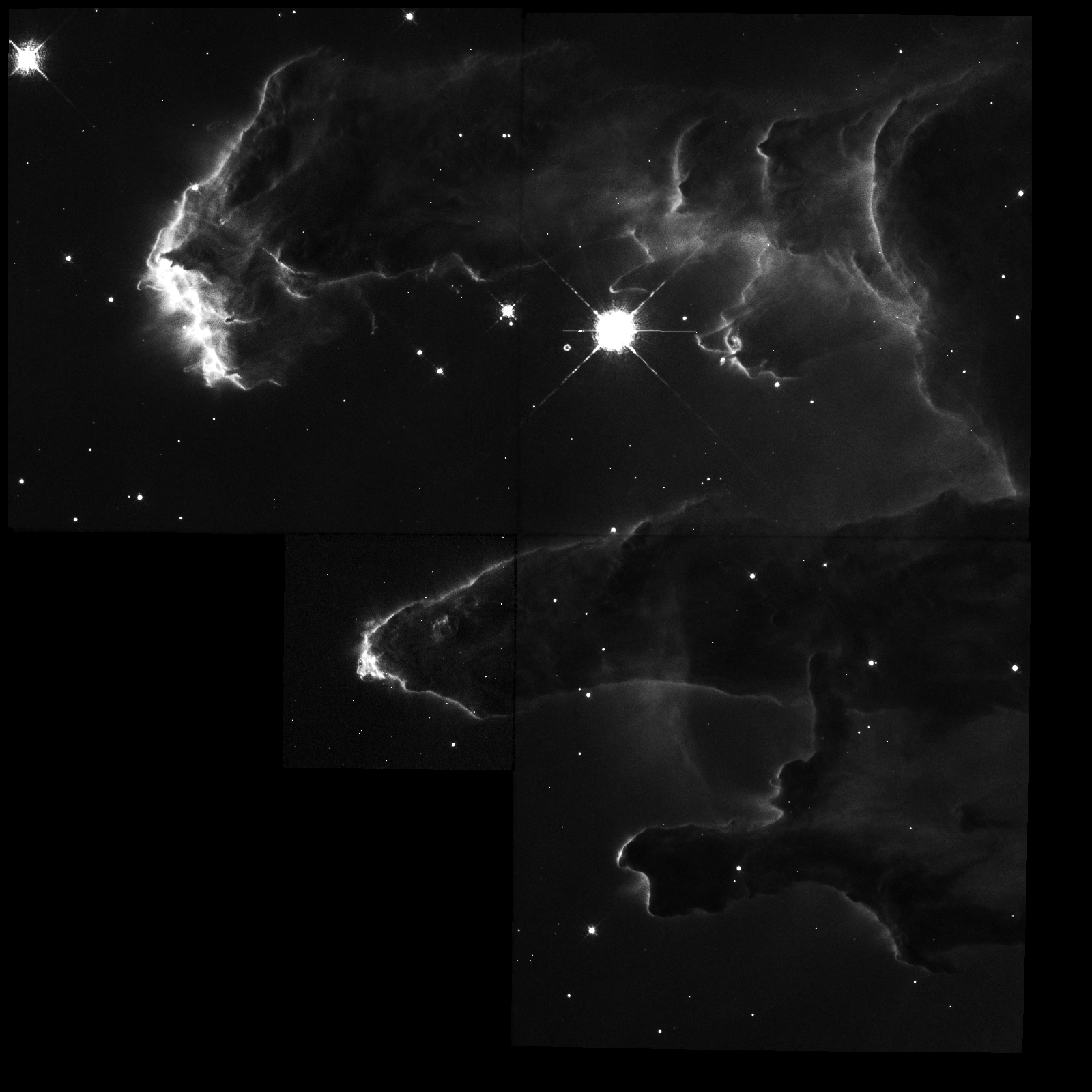
Generate Image from FITS File
Parse and render FITS astronomical image data.
-
Precess Star Coordinates
Calculate stellar precession to a target epoch.
-
Calculate WCS from TLE
Compute World Coordinate System values from orbital elements.
more like this
markdown-plus-plus
A powerful, browser-based content management panel for static site generators.