milli.nvim
Animated ASCII splash screens for Neovim. 29 bundled splashes + bring your own via the milli CLI / web playground.
 Amansingh-afk
milli.nvim
Animated ASCII splash screens for Neovim. Ships lean with 6 bundled splashes, live procedural shaders (matrix rain, plasma, DOOM fire, starfield — computed in pure Lua, no frames on disk), and a community registry with 26+ more splashes: :MilliInstall <name> pulls any of them without leaving the editor. Bring your own from any image, GIF, or plain text via the milli CLI. Works with dashboard-nvim, alpha-nvim, snacks.nvim, mini.starter, or raw VimEnter.
Contents
- Bundled splashes
- Install
- Quick start
- Live shaders ← infinite, zero-asset animations
- Community registry ←
:MilliInstall - Using your own splash ← bring any image, GIF, or text
- Dashboard integrations
- Previewing
- API
- Requirements
- License
Bundled splashes
Six ship with the plugin — install is small and fast:
fire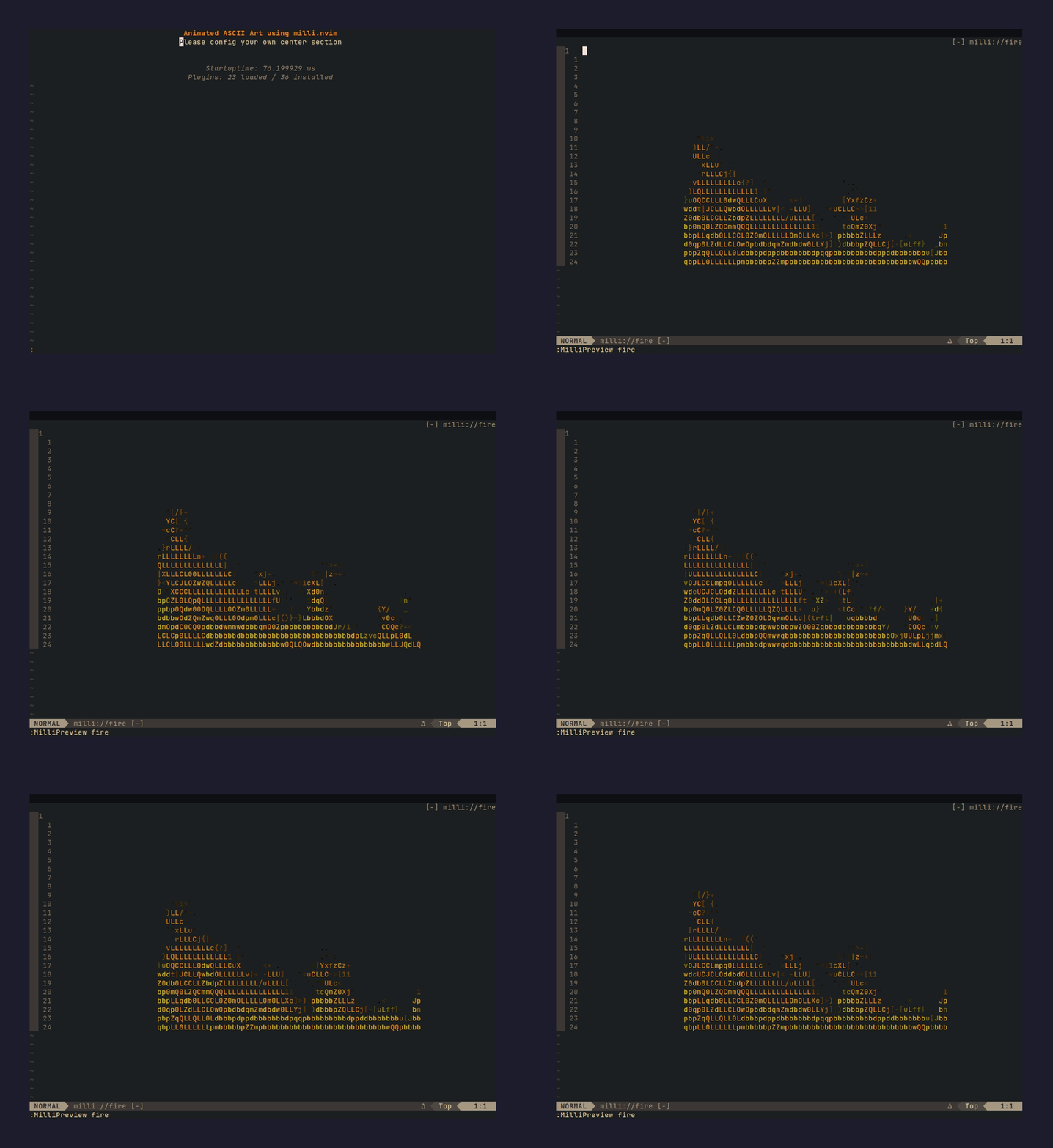 |
blackhole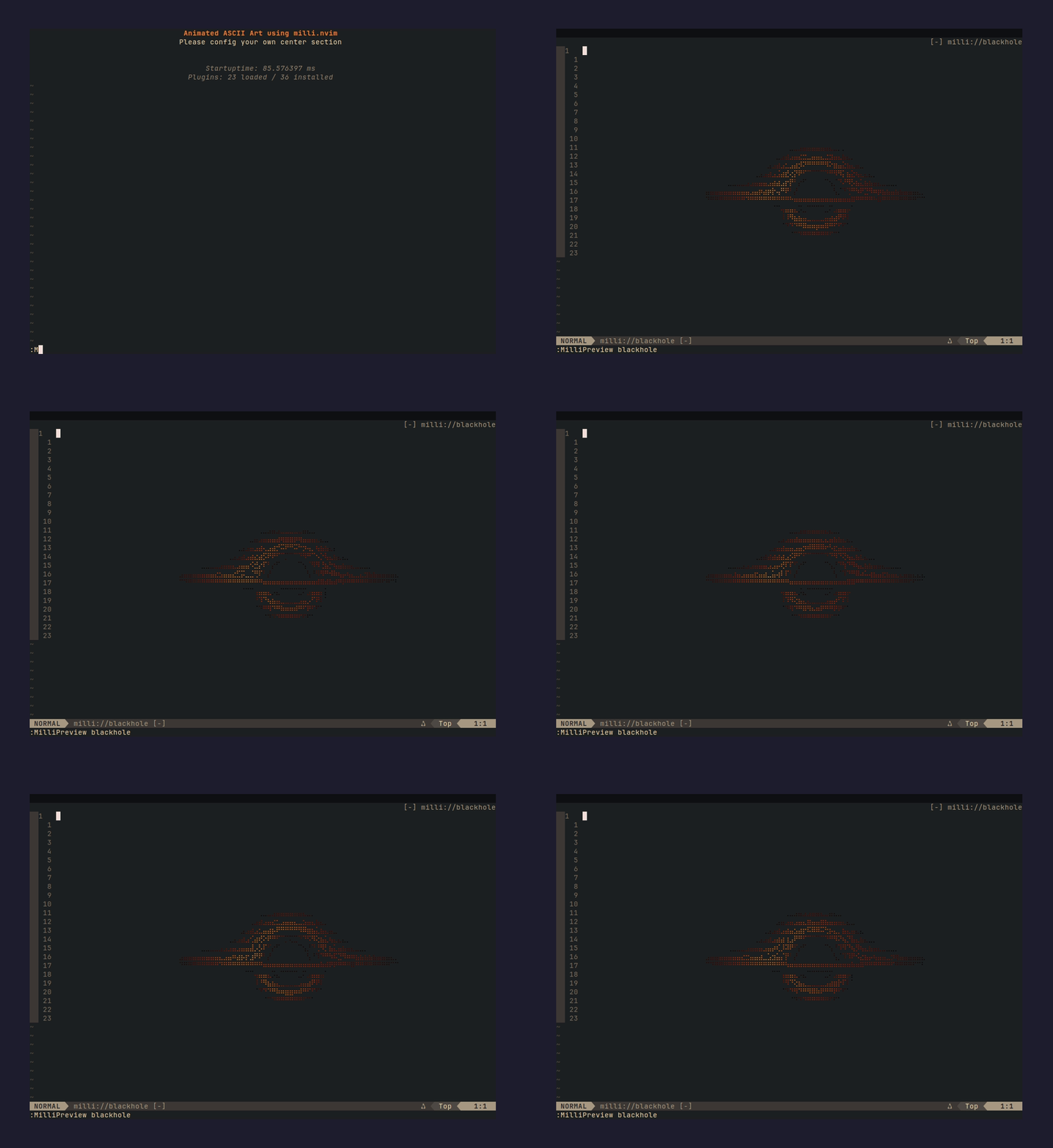 |
finger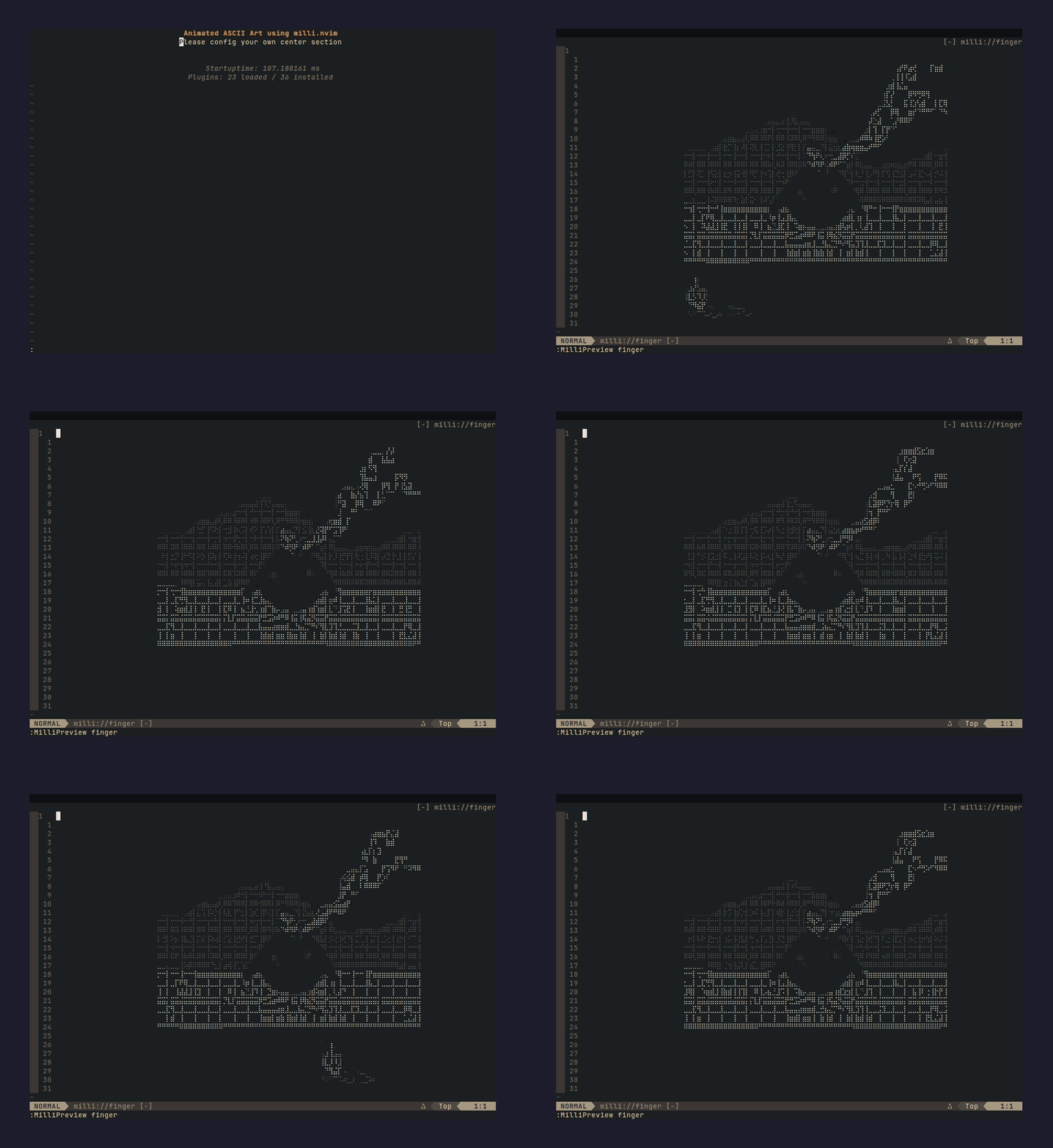 |
dancerramp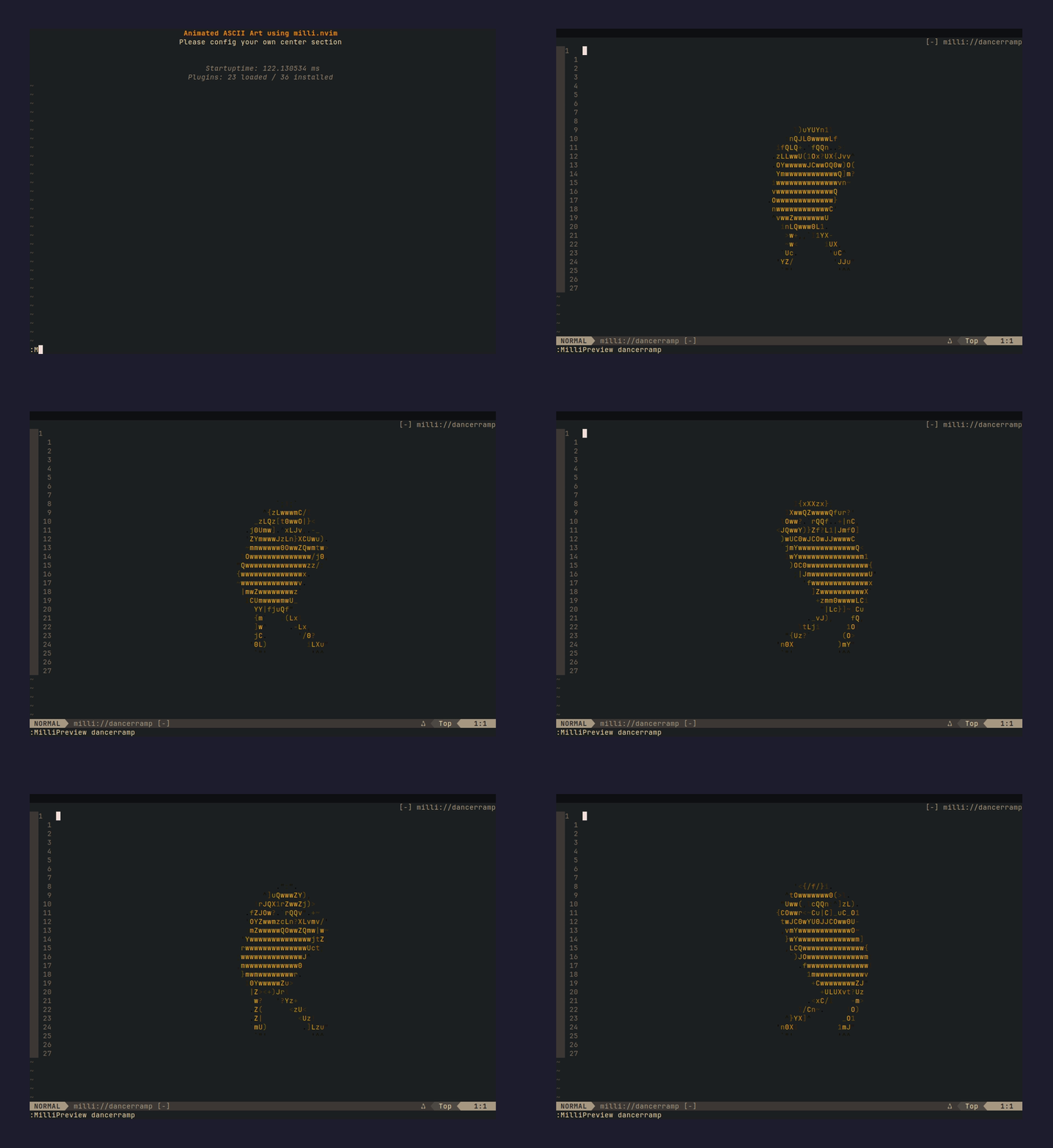 |
skeleton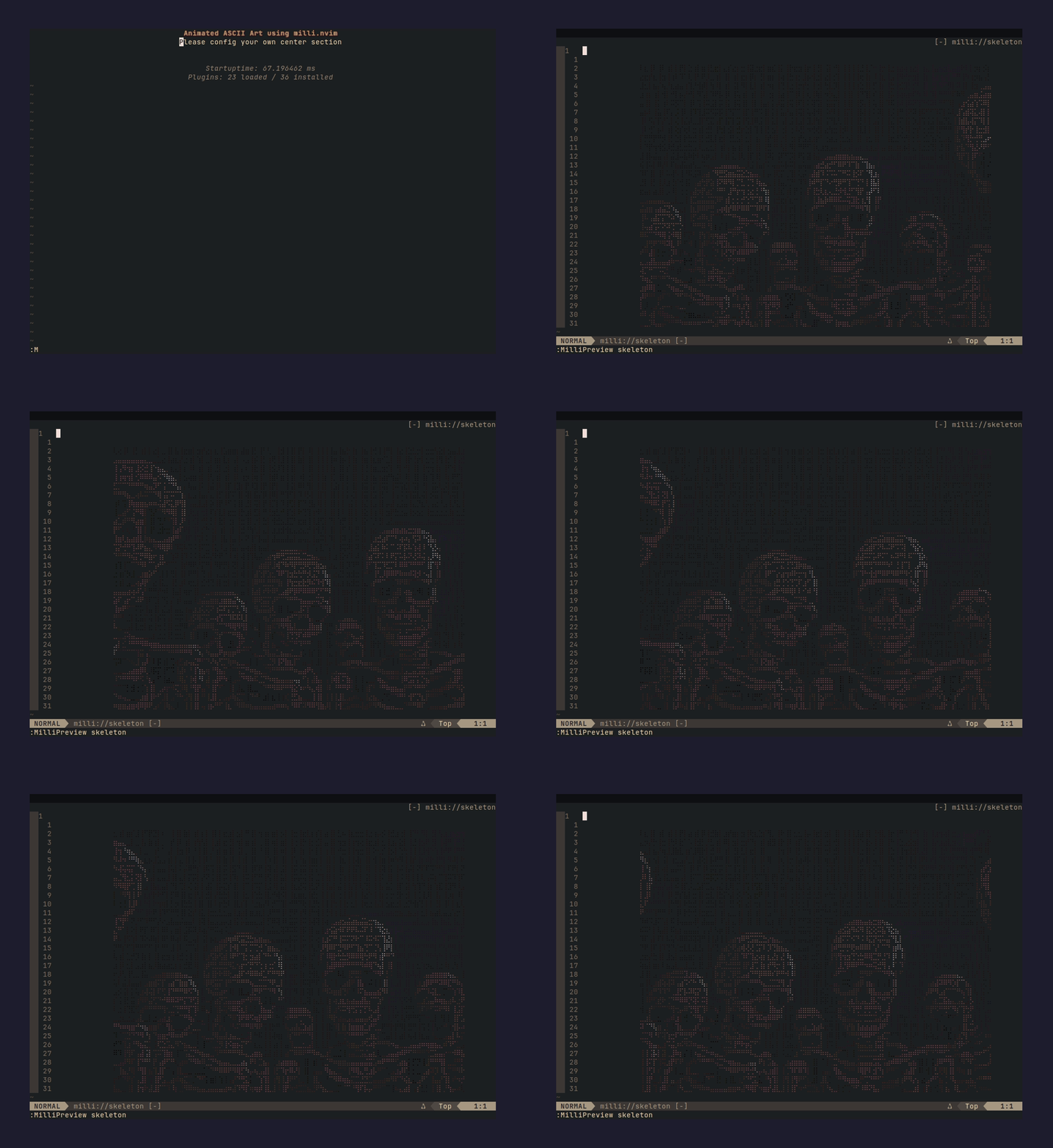 |
vibecat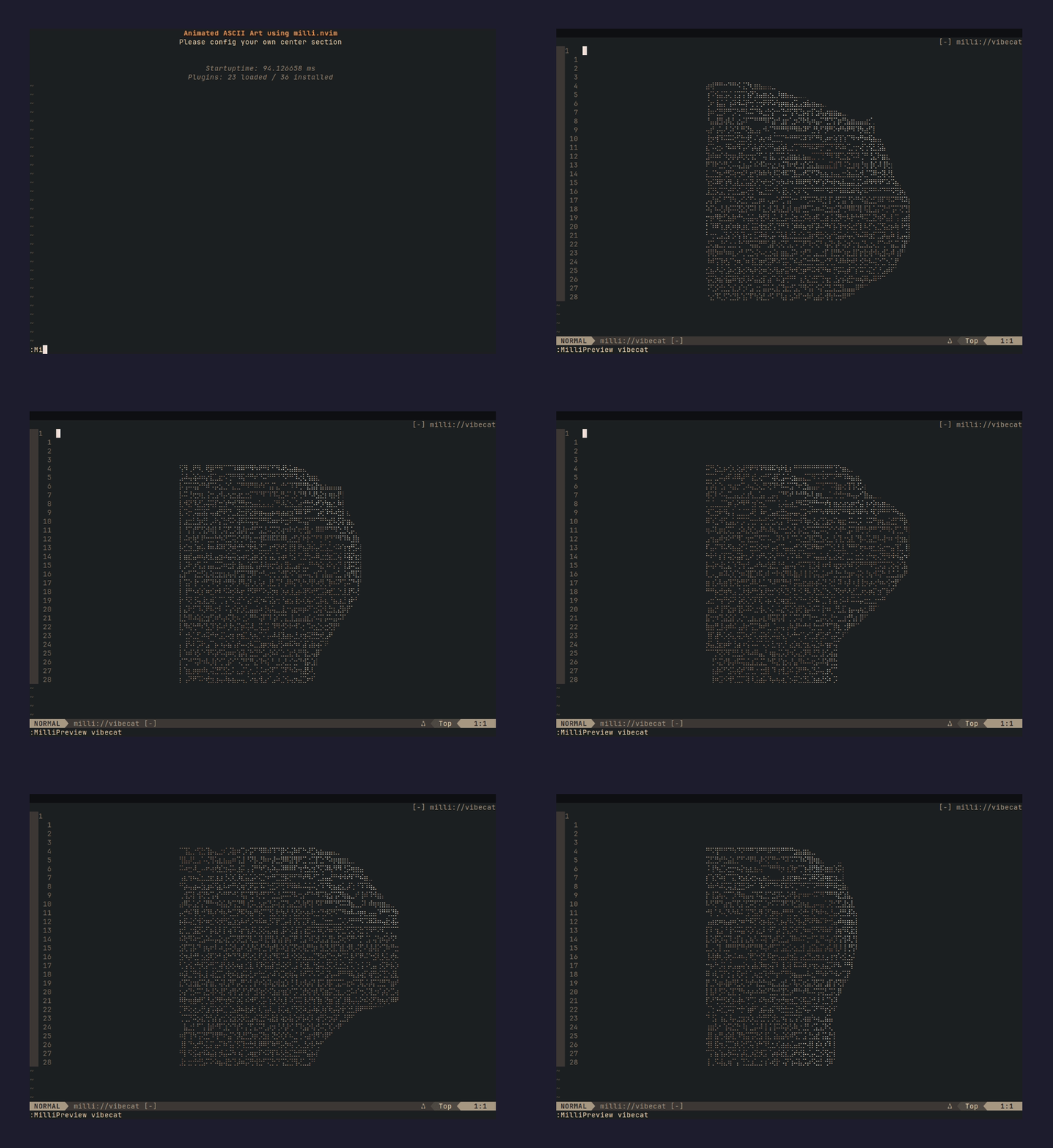 |
26+ more live in the community registry — one command away, no plugin update needed:
:MilliBrowse            " list everything
:MilliInstall aurora    " download, validate, done
aurora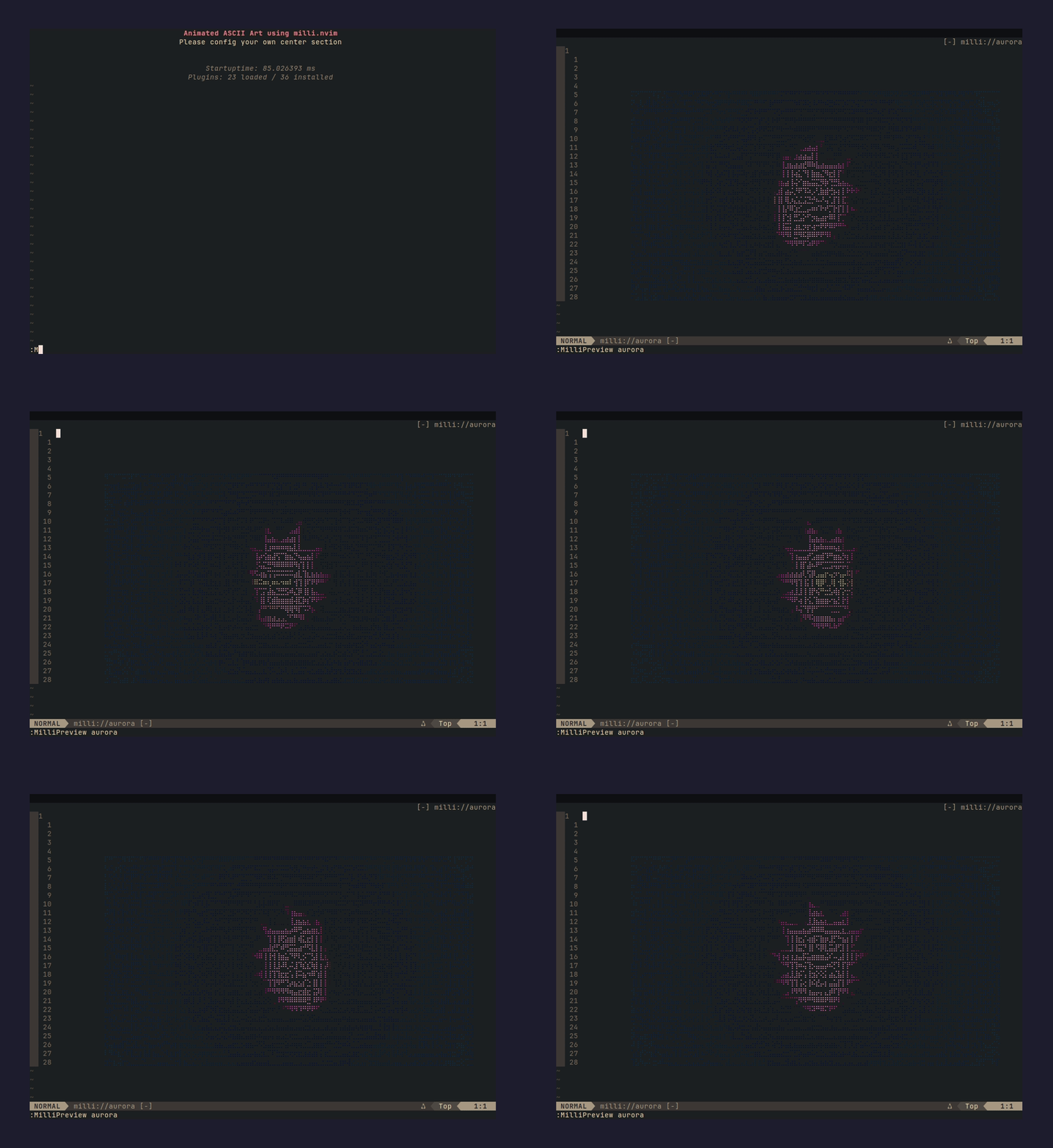 |
flyingdragon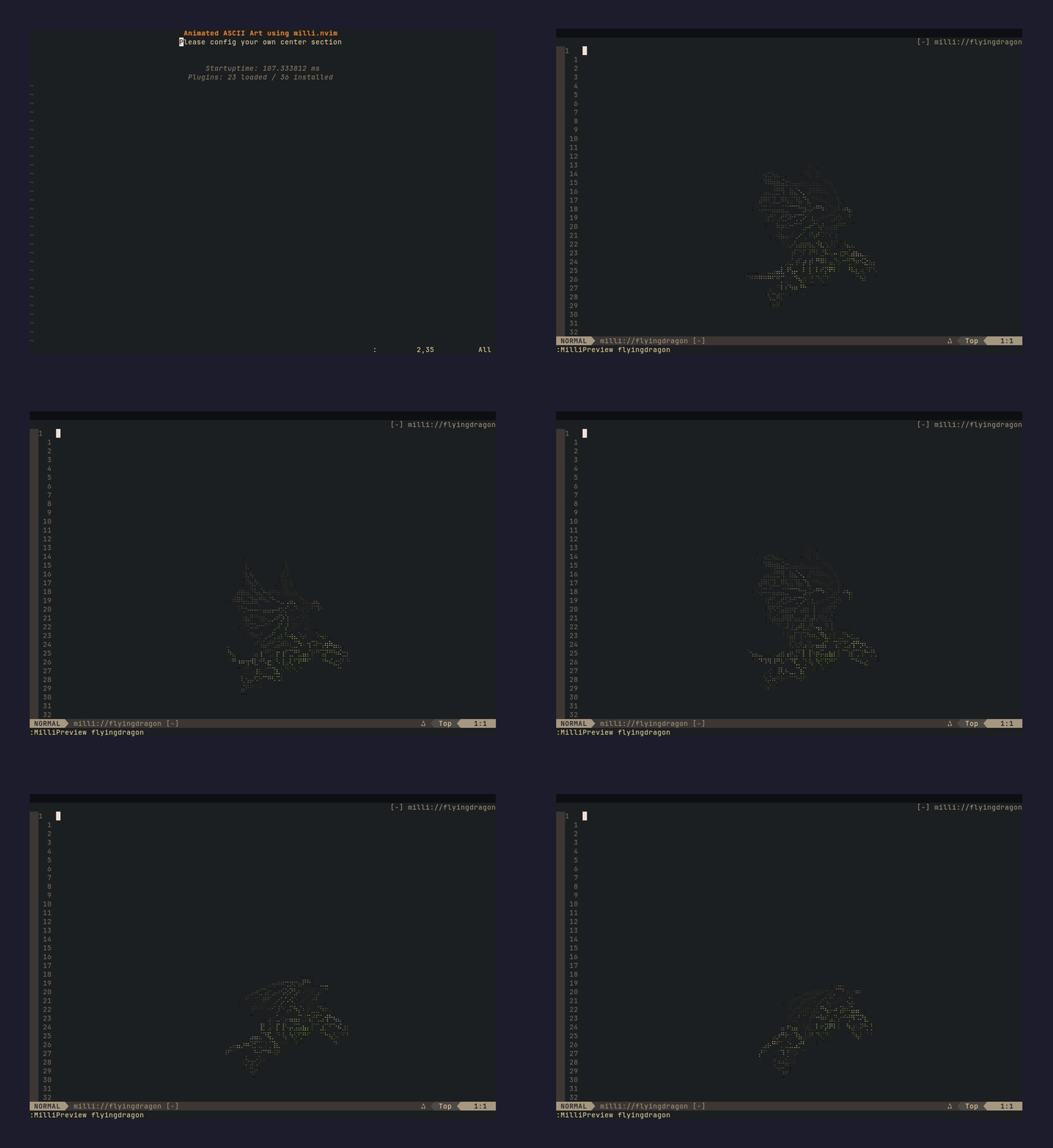 |
catwoman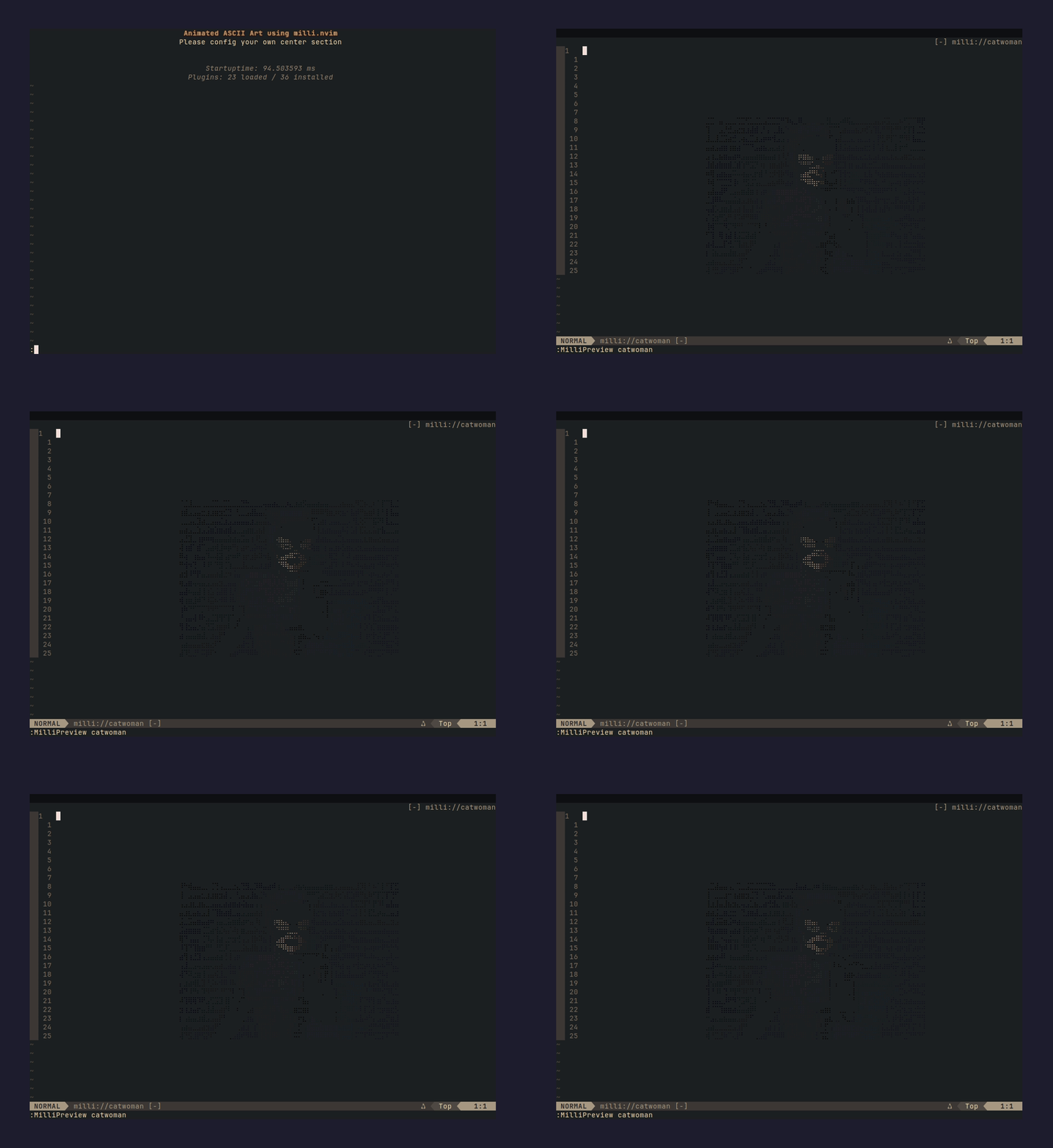 |
Install
lazy.nvim:
{ "amansingh-afk/milli.nvim", lazy = false }
packer.nvim:
use "amansingh-afk/milli.nvim"
Quick start
-- preview any bundled splash in a scratch buffer
:MilliPreview fire

-- or wire into your dashboard
require("milli").dashboard({ splash = "fire", loop = true })
List bundled splash names:
:lua print(vim.inspect(require("milli").list()))
For dashboard-nvim / alpha-nvim / snacks.nvim / mini.starter wiring, see Dashboard integrations.
Live shaders
Baked splashes are flipbooks. Shaders are the opposite: pure-Lua procedural animation computed every frame — no data files, never repeats, resizes to your window.
:MilliShader rain       " fullscreen matrix rain
:MilliShader plasma     " flowing color fields
:MilliShader doomfire   " the classic PSX fire
:MilliShader starfield  " warp speed
q or <Esc> dismisses. Or drive one programmatically:
-- paint a live shader into any buffer; returns a stop() function
local stop = require("milli").shader(buf, { shader = "rain" })

-- options
require("milli").shader(buf, {
  shader = "plasma",  -- rain | plasma | doomfire | starfield
  fps = 20,           -- default: per-shader (18-24)
  cols = 80,          -- default: window width
  rows = 24,          -- default: window height
  seed = 42,          -- rain/doomfire/starfield randomness
  hue = 0.8,          -- plasma base hue 0..1
})
Colors are quantized to a small fixed palette per shader, so they stay well under Neovim's highlight-group cap.
Community registry
Install splashes shared by other users straight from Neovim — no plugin update, no manual file copying:
:MilliBrowse            " list what's in the registry
:MilliInstall doomfire  " download → validate → ready
:MilliPreview doomfire  " watch it
:MilliUninstall doomfire
Installed splashes land in stdpath("data")/milli/splashes/ and behave exactly like bundled ones — same splash = "name" API, same tab-completion.
Safety: registry files must be pure data modules (the exact output of milli export -t lua). :MilliInstall loads each candidate in an empty Lua environment before saving — anything that calls a function, touches a global, or isn't plain frame data is rejected.
Want your splash in the registry? PR it to milli-splashes — it's a frames.lua + one line of index.json. Requires curl on $PATH. Point vim.g.milli_registry at your own URL to self-host a private registry.
Using your own splash
Powered by milli - the ASCII engine behind this plugin. ⭐ Star it on GitHub if you find it useful.
The bundled and registry splashes are a starting point. Bring any image or GIF you want - a custom logo, mascot, anything - and it becomes a splash in four steps.
1. Install the CLI (@amansingh-afk/milli):
npm install -g @amansingh-afk/milli
2. Generate frames.lua from any image / GIF — or from nothing:
# from an image or GIF
milli export mycat.gif ./out -t lua -w 60 --no-bg

# from plain text — your name in flames, glitch, matrix reveal, 8 effects
milli text "NEOVIM" -e fire -o ./out -t lua
milli text "RICKY" -e matrix -o ./out -t lua

# from a shader — baked at a fixed size
milli shader plasma -w 70 -h 16 -o ./out -t lua
Useful flags:
-w 60- width in columns; tune to taste--no-bg- drop background color (cleaner on dashboards)-m braille- braille mode for higher-detail line art (image exports)-e <effect>- text effects:fireglitchwavematrixdissolvetypewriterpulserainbow
3. Copy frames.lua into your Neovim config:
mkdir -p ~/.config/nvim/lua/milli/splashes
cp out/frames.lua ~/.config/nvim/lua/milli/splashes/mycat.lua
Neovim's runtimepath auto-discovers ~/.config/nvim/lua/, so this file becomes a sibling to the plugin's bundled splashes - findable by the same machinery, tab-completable in :MilliPreview.
4. Use it - same API as any bundled splash:
require("milli").dashboard({ splash = "mycat", loop = true })
Preview it first:
:MilliPreview mycat
Custom module path (advanced)
If you don't want to piggyback on the milli.splashes namespace (e.g. you organize splashes under a dotfiles module), drop the file anywhere on runtimepath and reference it by Lua module path:
-- ~/.config/nvim/lua/mydots/splashes/mycat.lua
require("milli").dashboard({ module = "mydots.splashes.mycat", loop = true })
Works with every preset - splash = "name" for bundled/user-local, module = "path.to.mod" for custom namespaces.
Dashboard integrations
Pick your dashboard plugin. Each preset (dashboard, alpha, snacks, starter, vimenter) works identically with bundled or custom splashes.
dashboard-nvim
return {
  "nvimdev/dashboard-nvim",
  event = "VimEnter",
  dependencies = { "amansingh-afk/milli.nvim" },
  opts = function()
    local splash = require("milli").load({ splash = "finger" })
    return {
      theme = "doom",
      config = {
        header = splash.frames[1],         -- seed header with frame 0
        center = {
          { icon = "  ", desc = "Find File", key = "f", action = "Telescope find_files" },
          { icon = "  ", desc = "Quit",      key = "q", action = "qa" },
        },
      },
    }
  end,
  config = function(_, opts)
    require("dashboard").setup(opts)
    require("milli").dashboard({ splash = "finger", loop = true })
  end,
}
alpha-nvim
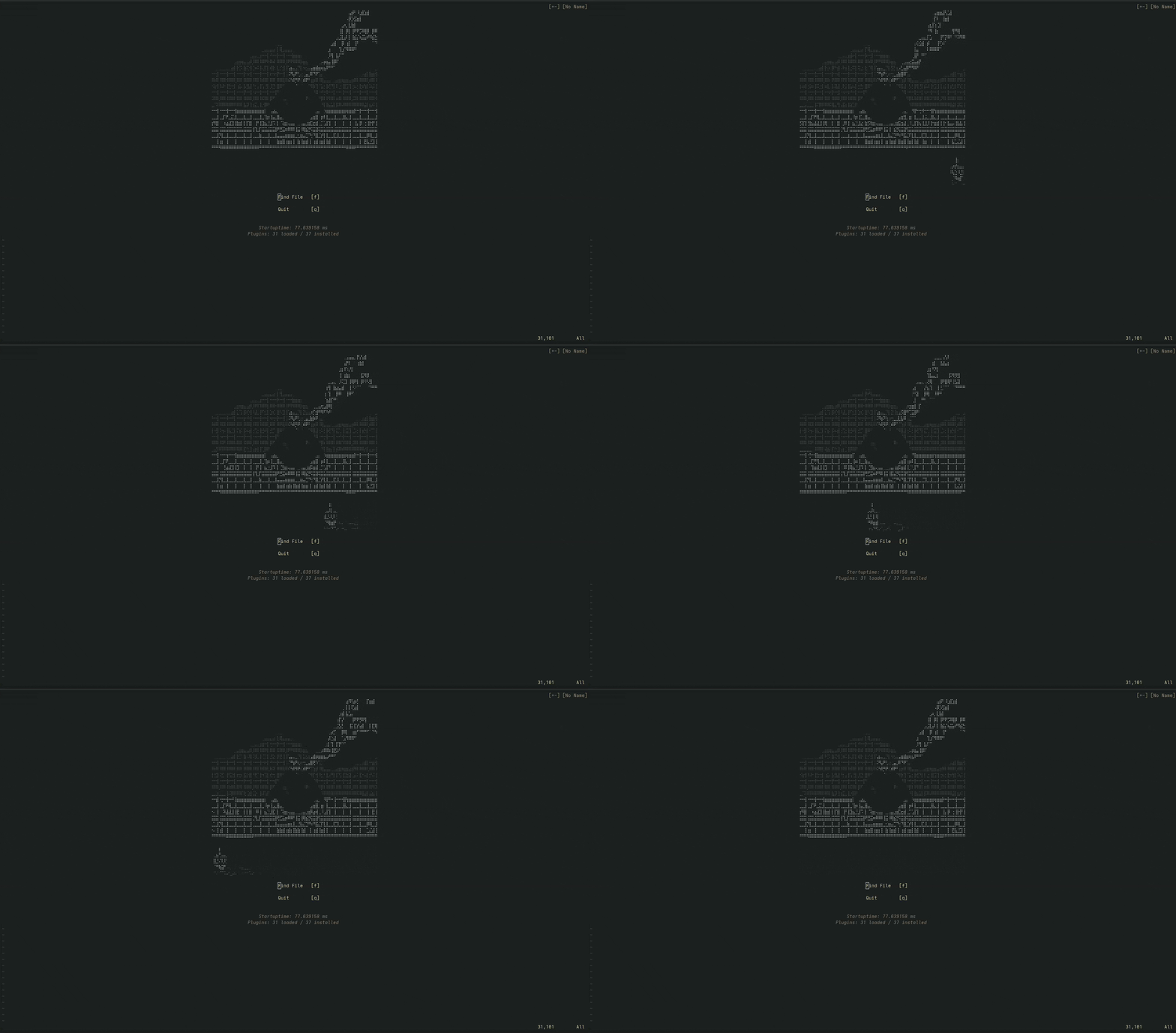
require("milli").alpha({ splash = "fire", loop = true })
snacks.nvim
return {
  "folke/snacks.nvim",
  priority = 1000,
  lazy = false,
  dependencies = { "amansingh-afk/milli.nvim" },
  opts = function()
    local splash = require("milli").load({ splash = "fire" })
    return {
      dashboard = {
        enabled = true,
        preset = {
          header = table.concat(splash.frames[1], "\n"),
        },
        sections = {
          { section = "header", padding = 1 },
          { section = "keys",   gap = 1, padding = 1 },
          { section = "startup" },
        },
      },
    }
  end,
  config = function(_, opts)
    require("snacks").setup(opts)
    require("milli").snacks({ splash = "fire", loop = true })
  end,
}
preset.header seeds frame 0 of the splash as snacks's default header so milli's anchor-search can locate the buffer position to animate over. The splash name in preset.header and in require("milli").snacks({ splash = ... }) must match.
mini.starter
require("milli").starter({ splash = "fire", loop = true })
No plugin (raw VimEnter)
require("milli").vimenter({ splash = "fire", loop = true })
Previewing
:MilliPreview <name>
Opens a scratch buffer, plays the splash in a loop. q or <Esc> dismisses. Tab-completes against bundled splashes and any you've dropped into ~/.config/nvim/lua/milli/splashes/. Run :MilliPreview with no arg to list what's available.
API
require("milli").play(buf, opts)       -- paint/animate into buf
require("milli").load(opts)            -- return the data table
require("milli").list()                -- all splash names (bundled + user + installed)
require("milli").shader(buf, opts)     -- live procedural shader; returns stop()
require("milli").shaders()             -- { "doomfire", "plasma", "rain", "starfield" }

require("milli").dashboard(opts)       -- autocmd preset for dashboard-nvim
require("milli").alpha(opts)           -- alpha-nvim
require("milli").snacks(opts)          -- snacks.nvim
require("milli").starter(opts)         -- mini.starter
require("milli").vimenter(opts)        -- raw VimEnter
opts
{
  splash = "fire",     -- bundled or user-local splash name, OR
  module = "mysplash", -- require path to an external splash module, OR
  data = { ... },      -- the data table directly
  loop = true,         -- repeat forever (default: false - play once)
}
A plain string is sugar for { splash = <string> }. So require("milli").dashboard("fire") works.
Requirements
- Neovim 0.10+ (extmarks, namespaces)
termguicolorsenabled (vim.opt.termguicolors = true)
Why extmarks, not ANSI escapes?
Neovim buffers strip ANSI. Colors are applied via extmarks + per-color highlight groups generated on demand. The groups are keyed on quantized fg/bg so a truecolor splash doesn't blow through Neovim's highlight-group cap (E849).
License
MIT.
more like this
Scythe
SCYTHE is a lightweight, C#-based game engine focused on modifiability and rapid iteration using Raylib.