Chesswrap
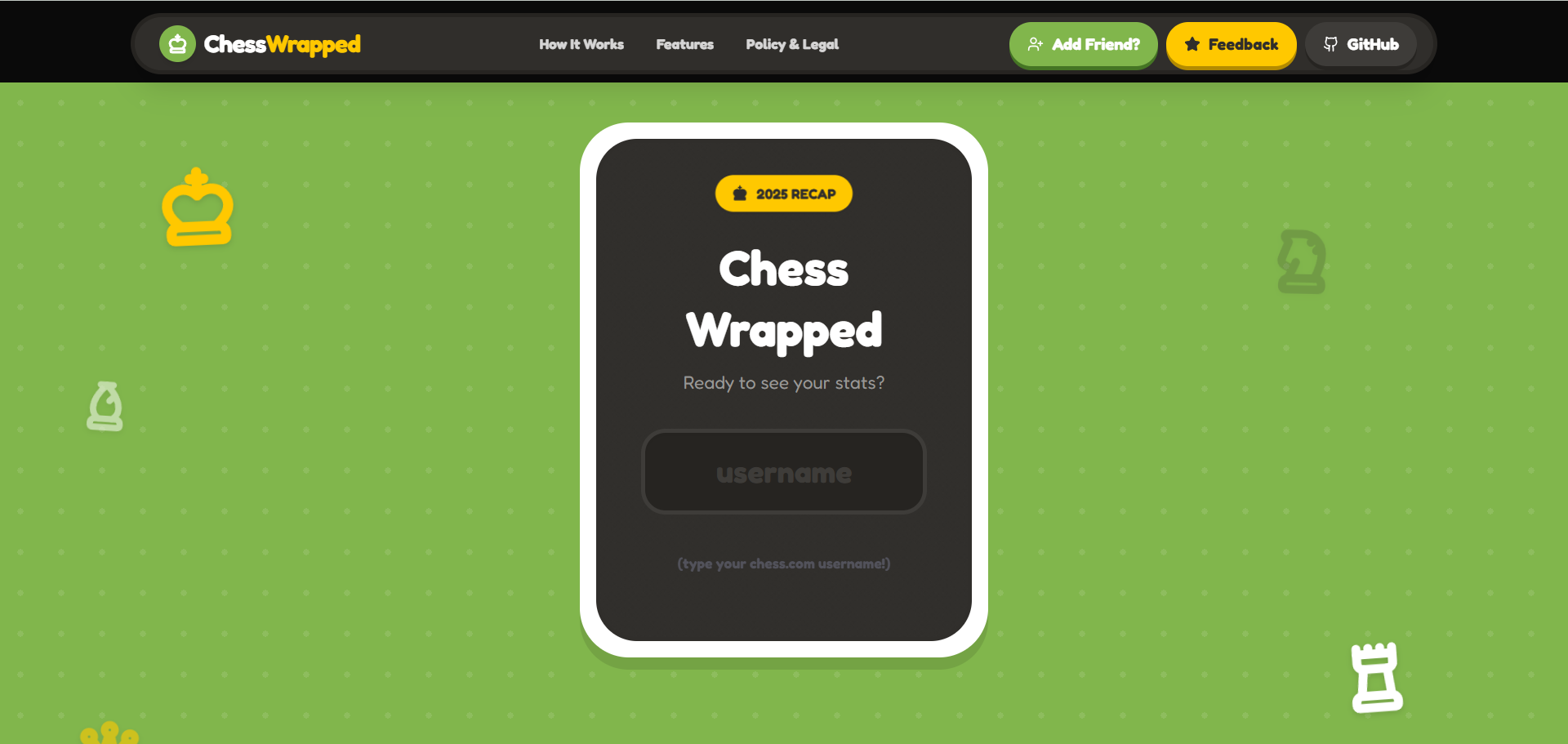
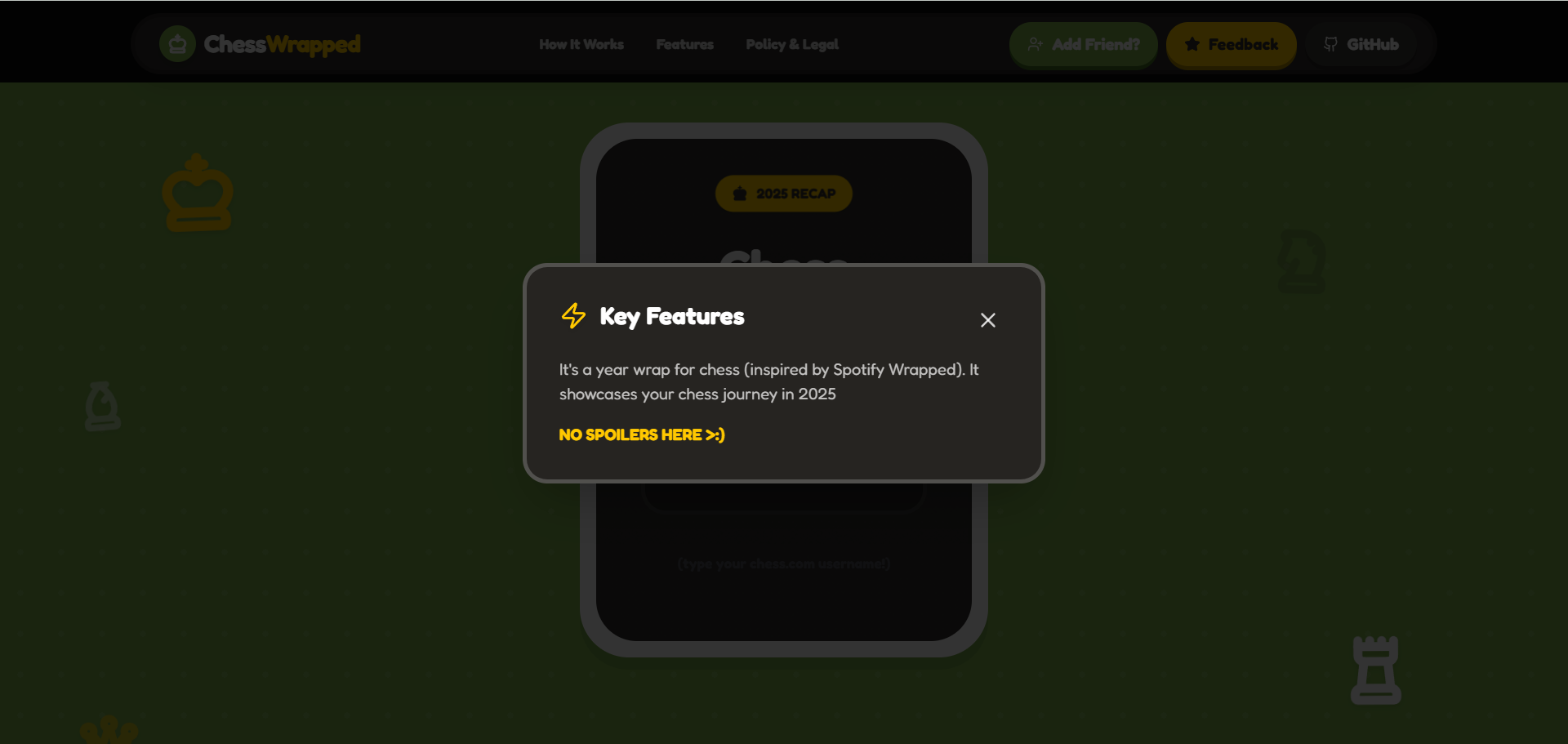
Inspired by Spotify wrap. It shows your chess journey in 2025 as a recap
 HuynhMaiThienAn
ChessWrapped 2025
A "Spotify Wrapped" style experience for Chess.com users, built with Next.js and the Chess.com Public API.
🛠️ Tech Stack
- Framework: Next.js
- Language: TypeScript
- Styling: Tailwind CSS
- Animations: Framer Motion
- Data Source: Chess.com Public API
- Icons: Lucide React
⚙️ Architecture & Data Flow
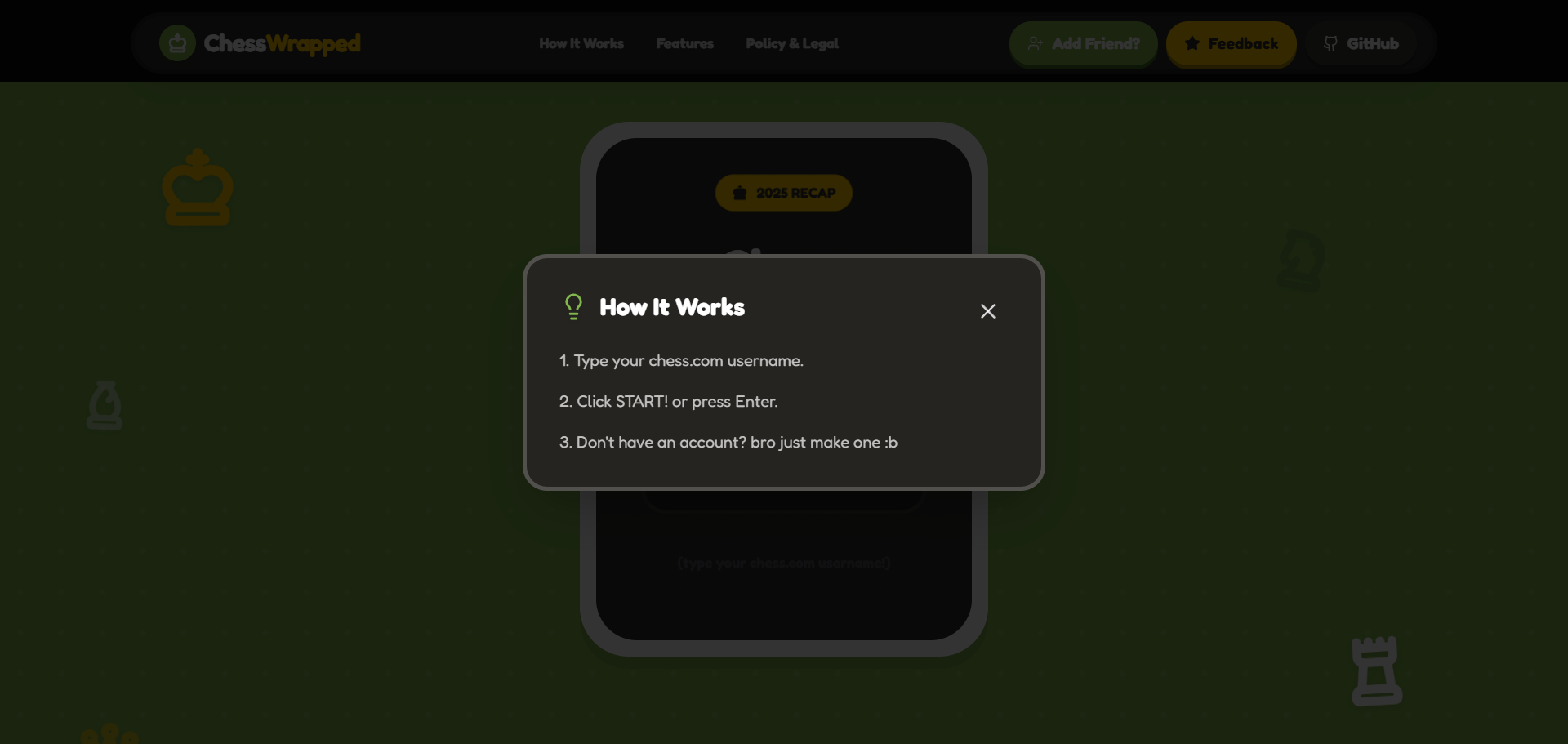
- User Input: The user enters their username on the landing page (
app/page.tsx). - Validation: The app pings the Chess.com API to verify the user exists and has archives for 2025.
- Data Fetching:
- On success, the user is routed to
/wrapped/[username]. - The
ChessContexttriggers a fetch for all monthly archives (JSON). - Games are parsed to calculate Total Games, Win/Loss/Draw ratios, and specific Opening names.
- On success, the user is routed to
- Visualization:
- Data is passed into the
<Carousel />component. - Framer Motion handles the slide transitions and entrance animations.
- Global Audio is managed in
layout.tsxto persist across route changes.
- Data is passed into the
This is a Next.js project bootstrapped with create-next-app.
Getting Started
First, run the development server:
npm run dev
# or
yarn dev
# or
pnpm dev
# or
bun dev
Open http://localhost:3000 with your browser to see the result.
You can start editing the page by modifying app/page.tsx. The page auto-updates as you edit the file.
This project uses next/font to automatically optimize and load Geist, a new font family for Vercel.
Learn More
To learn more about Next.js, take a look at the following resources:
- Next.js Documentation - learn about Next.js features and API.
- Learn Next.js - an interactive Next.js tutorial.
You can check out the Next.js GitHub repository - your feedback and contributions are welcome!
Deploy on Vercel
The easiest way to deploy your Next.js app is to use the Vercel Platform from the creators of Next.js.
Check out our Next.js deployment documentation for more details.
more like this
cc65-Chess
Portable chess game in C. Commodore 64, Apple 2, Atari, Oric, Commander X16, curses terminal, etc.