quadcopter_with_PID_controller
Quadcopter dynamics simulation with two proportional–integral–derivative (PID) controllers that adjust the motor speeds…
Python★ 51
Emulate Arduino, ESP32 & Raspberry Pi. in your browser. Write code, compile, and run on 19 real boards — Arduino Uno, E…
 davidmonterocrespo24
git clone https://github.com/davidmonterocrespo24/velxio.gitdavidmonterocrespo24/velxioLive at velxio.dev
A fully local, open-source multi-board emulator. Write Arduino C++ or Python, compile it, and simulate it with real CPU emulation and 48+ interactive electronic components — all running in your browser.
19 boards · 5 CPU architectures: AVR8 (ATmega / ATtiny), ARM Cortex-M0+ (RP2040), RISC-V RV32IMC/EC (ESP32-C3 / CH32V003), Xtensa LX6/LX7 (ESP32 / ESP32-S3 via QEMU), and ARM Cortex-A53 (Raspberry Pi 3 Linux via QEMU).
Velxio is free and open-source. Building and maintaining a full multi-board emulator takes a lot of time — if it saves you time or you enjoy the project, sponsoring me directly helps keep development going.
| Platform | Link |
|---|---|
| GitHub Sponsors (preferred) | github.com/sponsors/davidmonterocrespo24 |
| PayPal | paypal.me/odoonext |
Your support helps cover server costs, library maintenance, and frees up time to add new boards, components, and features. Thank you!
https://velxio.dev — no installation needed. Open the editor, write your sketch, and simulate directly in the browser.
To self-host with Docker (single command):
docker run -d \
  --name velxio \
  -p 3080:80 \
  -v velxio-data:/app/data \
  -v velxio-arduino-libs:/root/.arduino15 \
  -v velxio-arduino-user-libs:/root/Arduino \
  -v velxio-ccache:/var/cache/ccache \
  -v velxio-build:/var/lib/velxio-build \
  ghcr.io/davidmonterocrespo24/velxio:master
Then open http://localhost:3080. Tail logs any time with
docker logs -f velxio.
The named volumes are what make compile times reasonable on subsequent runs — without them, every container restart wipes the ESP-IDF build cache and the first compile after each restart takes 5-7 minutes instead of 5-30 seconds.
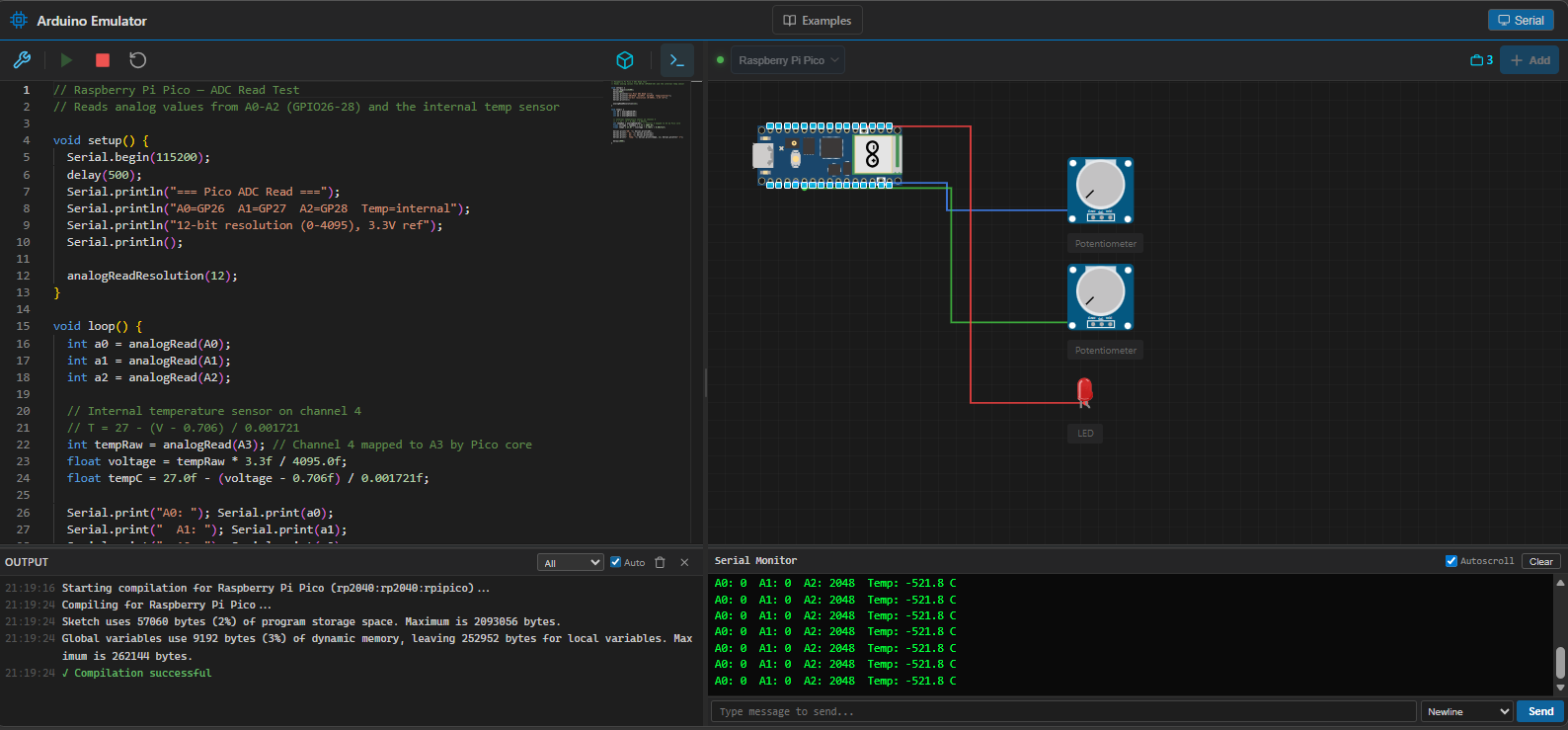
Raspberry Pi Pico simulation — ADC read test with two potentiometers, Serial Monitor showing live output, and compilation console at the bottom.
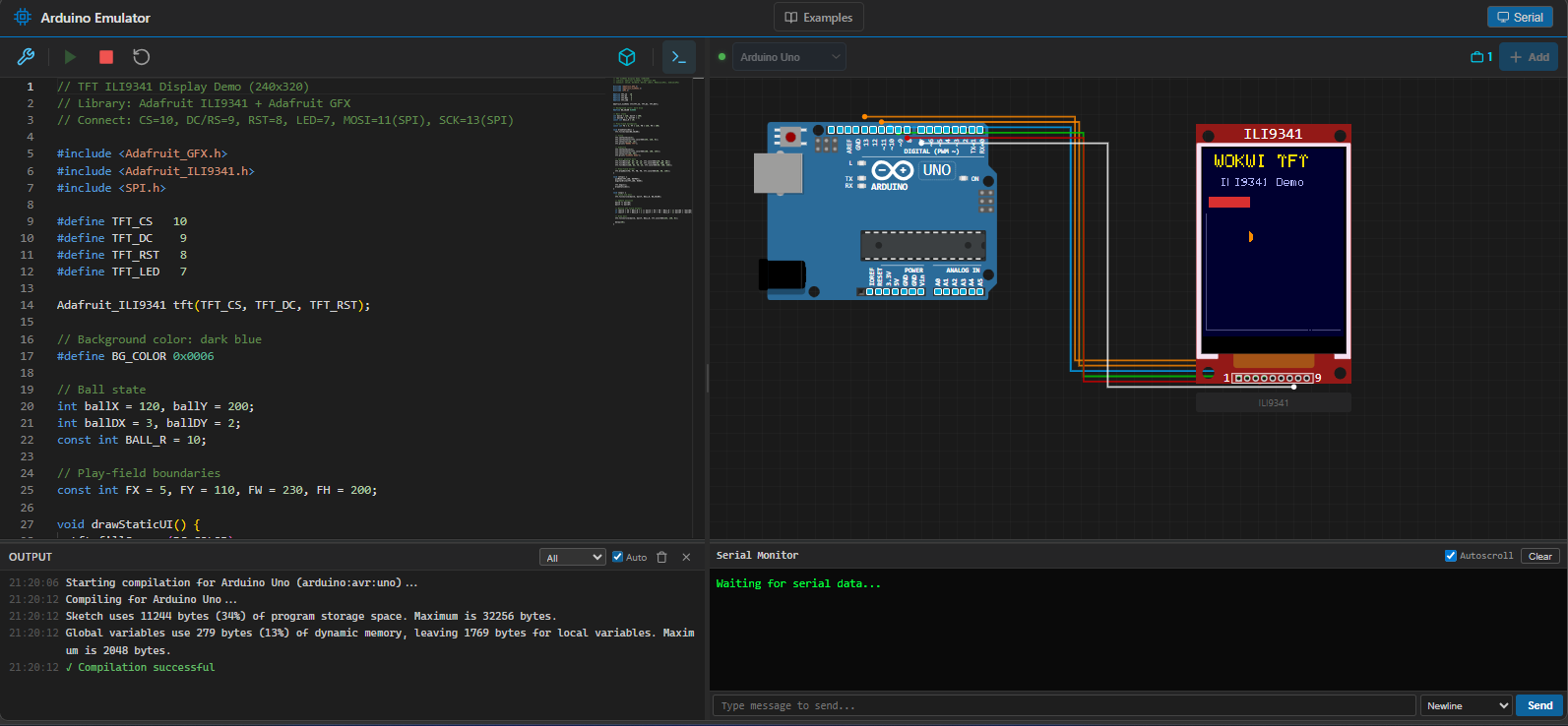
Arduino Uno driving an ILI9341 240×320 TFT display via SPI — rendering a real-time graphics demo using Adafruit_GFX + Adafruit_ILI9341.
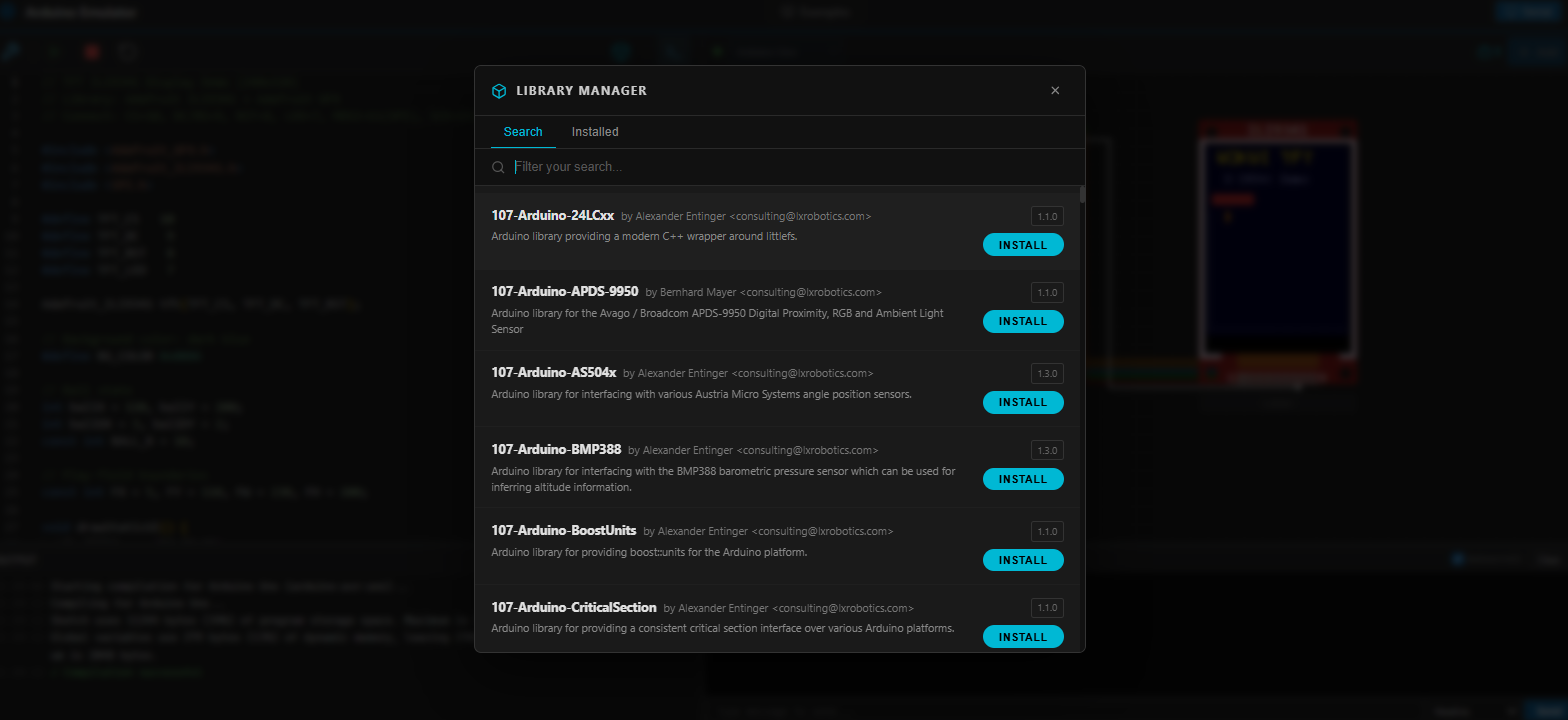
Library Manager loads the full Arduino library index on open — browse and install libraries without typing first.
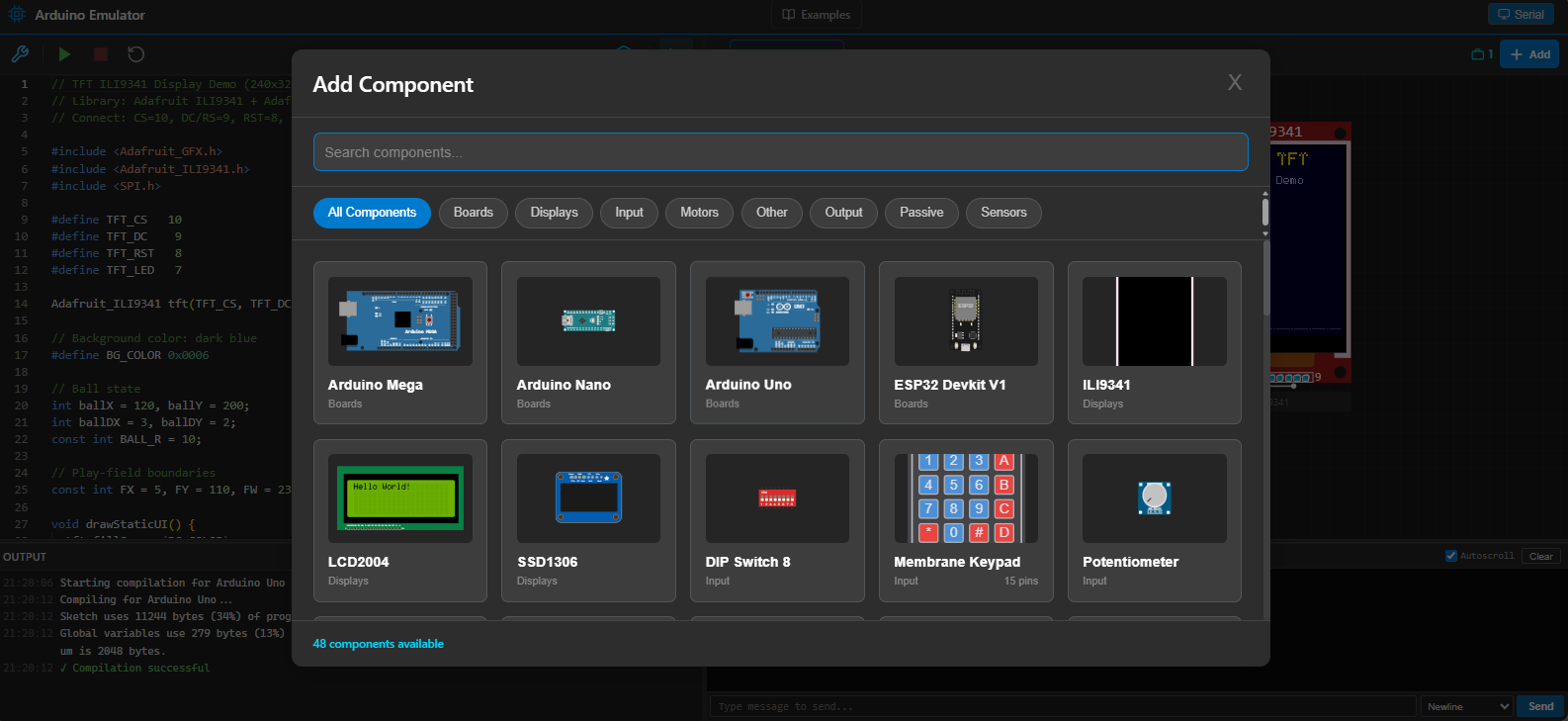
Component Picker showing 48 available components with visual previews, search, and category filters.
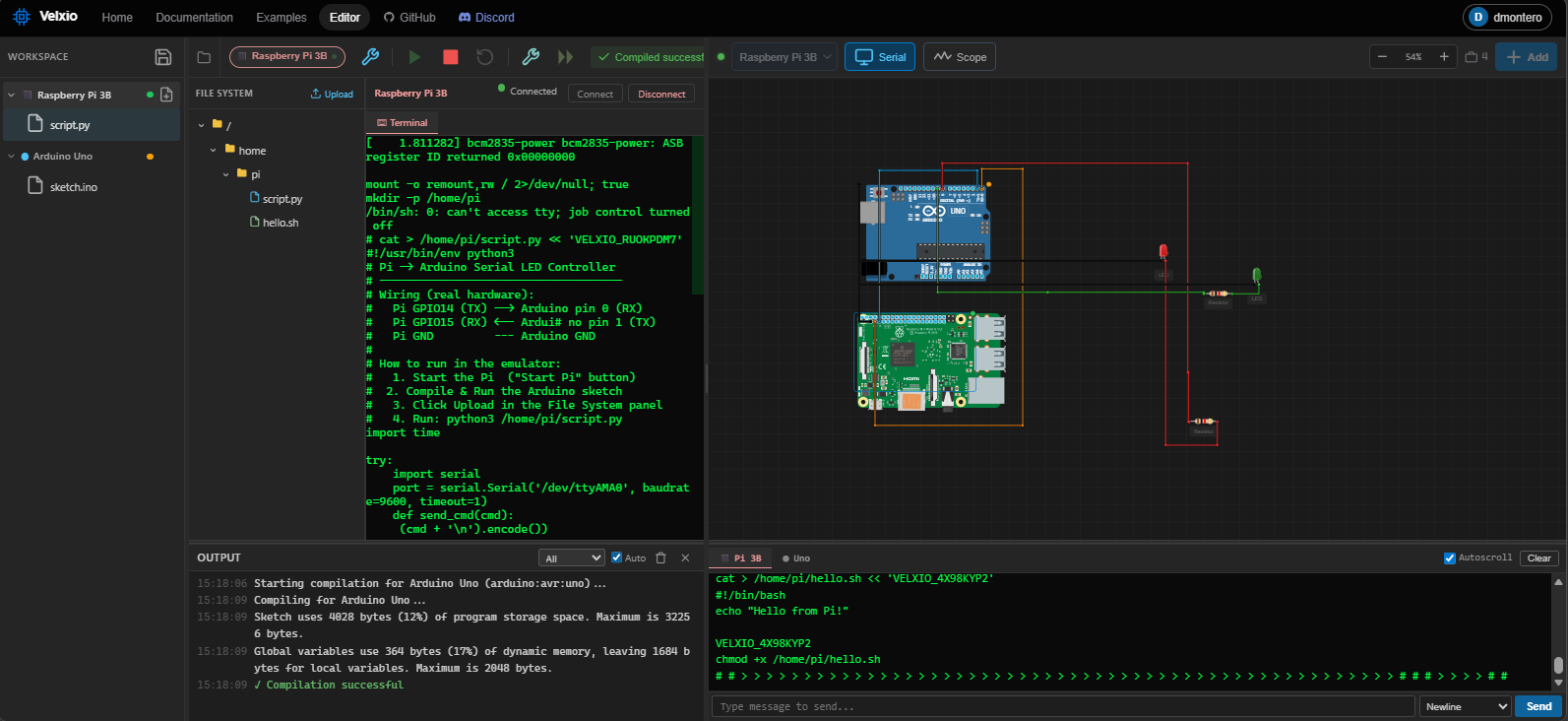
Multi-board simulation — Raspberry Pi 3 and Arduino running simultaneously on the same canvas, connected via serial. Mix different architectures in a single circuit.
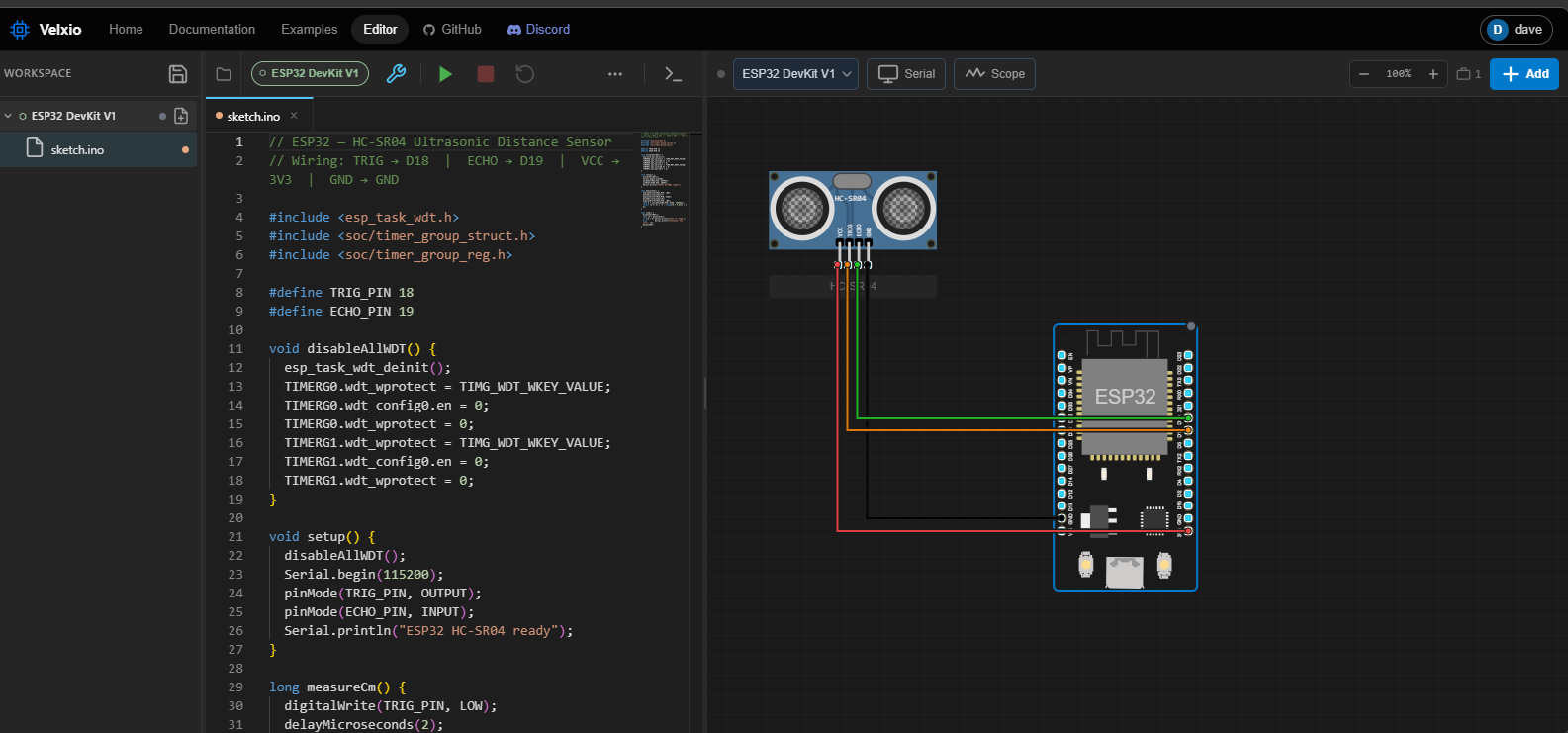
ESP32 simulation with an HC-SR04 ultrasonic distance sensor — real Xtensa emulation via QEMU with trigger/echo GPIO timing.
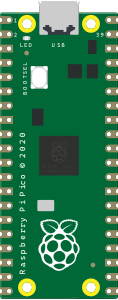 Raspberry Pi Pico |
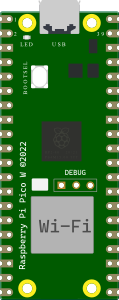 Raspberry Pi Pico W |
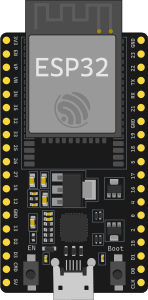 ESP32 DevKit C |
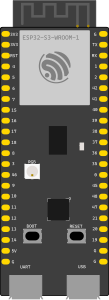 ESP32-S3 |
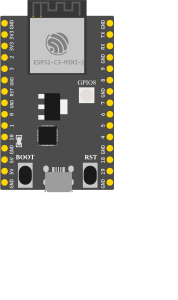 ESP32-C3 |
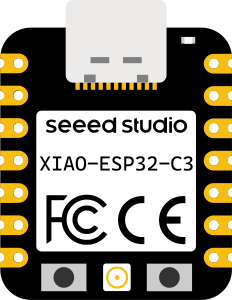 Seeed XIAO ESP32-C3 |
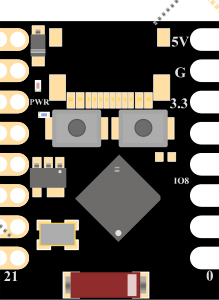 ESP32-C3 SuperMini |
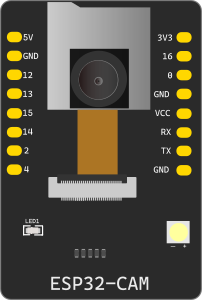 ESP32-CAM |
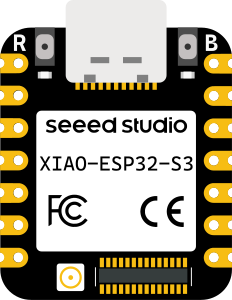 Seeed XIAO ESP32-S3 |
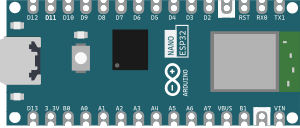 Arduino Nano ESP32 |
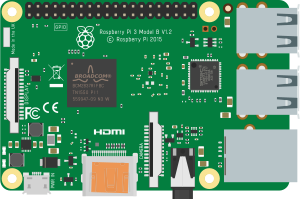 Raspberry Pi 3B |
Arduino Uno · Nano · Mega 2560 ATtiny85 · Leonardo · Pro Mini (AVR8 / ATmega) |
| Board | CPU | Engine | Language |
|---|---|---|---|
| Arduino Uno | ATmega328p @ 16 MHz | avr8js (browser) | C++ (Arduino) |
| Arduino Nano | ATmega328p @ 16 MHz | avr8js (browser) | C++ (Arduino) |
| Arduino Mega 2560 | ATmega2560 @ 16 MHz | avr8js (browser) | C++ (Arduino) |
| ATtiny85 | ATtiny85 @ 8 MHz (int) / 16 MHz (ext) | avr8js (browser) | C++ (Arduino) |
| Arduino Leonardo | ATmega32u4 @ 16 MHz | avr8js (browser) | C++ (Arduino) |
| Arduino Pro Mini | ATmega328p @ 8/16 MHz | avr8js (browser) | C++ (Arduino) |
| Raspberry Pi Pico | RP2040 @ 133 MHz | rp2040js (browser) | C++ (Arduino) |
| Raspberry Pi Pico W | RP2040 @ 133 MHz | rp2040js (browser) | C++ (Arduino) |
| ESP32 DevKit V1 | Xtensa LX6 @ 240 MHz | QEMU lcgamboa (backend) | C++ (Arduino) |
| ESP32 DevKit C V4 | Xtensa LX6 @ 240 MHz | QEMU lcgamboa (backend) | C++ (Arduino) |
| ESP32-S3 | Xtensa LX7 @ 240 MHz | QEMU lcgamboa (backend) | C++ (Arduino) |
| ESP32-CAM | Xtensa LX6 @ 240 MHz | QEMU lcgamboa (backend) | C++ (Arduino) |
| Seeed XIAO ESP32-S3 | Xtensa LX7 @ 240 MHz | QEMU lcgamboa (backend) | C++ (Arduino) |
| Arduino Nano ESP32 | Xtensa LX6 @ 240 MHz | QEMU lcgamboa (backend) | C++ (Arduino) |
| ESP32-C3 DevKit | RISC-V RV32IMC @ 160 MHz | QEMU lcgamboa (backend) | C++ (Arduino) |
| Seeed XIAO ESP32-C3 | RISC-V RV32IMC @ 160 MHz | QEMU lcgamboa (backend) | C++ (Arduino) |
| ESP32-C3 SuperMini | RISC-V RV32IMC @ 160 MHz | QEMU lcgamboa (backend) | C++ (Arduino) |
| CH32V003 | RISC-V RV32EC @ 48 MHz | QEMU lcgamboa (backend) | C++ (Arduino) |
| Raspberry Pi 3B | ARM Cortex-A53 @ 1.2 GHz | QEMU raspi3b (backend) | Python |
.ino / .h / .cpp / .py filesarduino-cli backend — compile sketches to .hex / .bin filesmillis(), delay(), PWM via analogWrite()analogRead(), voltage injection from potentiometers on canvasAttinyCorerequestAnimationFramedelay() skips ahead in simulation time instead of busy-waitingSee docs/RP2040_EMULATION.md for full technical details.
WiFi.begin("PICSimLabWifi", ""))See docs/ESP32_EMULATION.md for setup and full technical details.
libqemu-riscv32 and the esp32c3-picsimlab machine — same backend pattern as Xtensa ESP32, different libqemu binaryRiscVCore.ts, Esp32C3Simulator.ts) is kept as Vitest-only unit-test infrastructure — it cannot handle the 150+ ROM functions ESP-IDF needs and is not the production emulation pathSee docs/RISCV_EMULATION.md for full technical details.
qemu-system-aarch64 -M raspi3bSee docs/RASPBERRYPI3_EMULATION.md for full technical details.
.vlx file format — single-file JSON snapshot of the whole
workspace (boards, file groups, components, wires). Download with the
Save button, restore with the Open .vlx button. The format is
versioned so files round-trip cleanly across versions..vlx files
(local disk, Dropbox, GitHub, Google Drive — your choice)./:username, server-side project
URLs and admin panels? Those live in the private overlay used to run
velxio.dev — see velxio-prod
for the open-core split details.Pick the install path that matches your appetite for setup. All three
work out-of-the-box without an .env file — defaults are picked
automatically.
| Path | Boards available | Build time | Best for |
|---|---|---|---|
| A. Docker (prebuilt image) | All 19 (AVR, RP2040, RISC-V, ESP32, Raspberry Pi 3) | ~30 s download | Just want it running |
| B. Docker Compose (build from source) | All 19 | ~10–15 min first build | Want to modify the code |
| C. Manual install | Browser-only boards (AVR, RP2040, RISC-V) | ~5 min | Frontend / backend dev |
ESP32 (Xtensa) and Raspberry Pi 3 emulation rely on QEMU
.solibraries that ship inside the Docker image. Manual installs get the browser-side boards out of the box — for ESP32 you'll want Docker (or follow docs/ESP32_EMULATION.md to wire up the QEMU binaries by hand).
docker run -d \
  --name velxio \
  -p 3080:80 \
  -v velxio-data:/app/data \
  -v velxio-arduino-libs:/root/.arduino15 \
  -v velxio-arduino-user-libs:/root/Arduino \
  -v velxio-ccache:/var/cache/ccache \
  -v velxio-build:/var/lib/velxio-build \
  ghcr.io/davidmonterocrespo24/velxio:master
Open http://localhost:3080.
The five named volumes persist:
velxio-data → /app/data: SQLite DB, project sketch files, auto-generated SECRET_KEYvelxio-arduino-libs → /root/.arduino15: arduino-cli config + installed
cores (saves a 5–10 min reinstall on every container restart)velxio-arduino-user-libs → /root/Arduino: Library Manager-installed
Arduino libraries (e.g. Adafruit_BMP280, DHT, GFX). Without this,
every container restart re-downloads them on next compile.velxio-ccache → /var/cache/ccache: ccache C/C++ object cache for
ESP-IDF compiles. Empty on first compile, populated as you go;
subsequent compiles hit the cache and finish in seconds instead of
minutes.velxio-build → /var/lib/velxio-build: persistent ESP-IDF build dir
(one subdir per target — esp32, esp32c3, esp32s3). Lets ninja's
incremental build skip everything that hasn't changed; a re-compile
of an unchanged sketch finishes in 2-5 seconds.If you skip the volume flags, the Dockerfile declares all five paths as
VOLUME, so docker creates anonymous volumes and the caches still
survive container restarts (just harder to inspect/back up than named
ones). Only docker rm -v or docker volume prune would wipe them.
git clone https://github.com/davidmonterocrespo24/velxio.git
cd velxio
docker compose up -d --build
First build takes ~10–15 minutes (downloads ESP-IDF, builds the frontend). Subsequent builds are cached and take ~1 min.
Then open http://localhost:3080. The container generates a random
SECRET_KEY on first boot and persists it in ./data/, so no .env is
required to get going.
The OSS image has almost no configuration — there's no database, no auth,
no third-party integrations. Create backend/.env only if you want to
change the CORS origin used during local development.
| Variable | Default | Description |
|---|---|---|
FRONTEND_URL |
http://localhost:5173 |
Origin allowed by CORS for local Vite dev |
Deploying behind a reverse proxy? The container listens on plain HTTP on port 80 and accepts any
Hostheader — noserver_namewhitelist.
Running velxio.dev itself? Production-only configuration (host nginx
- HTTPS, backups, pinned upstream commit) lives in its own repo: github.com/velxio/velxio-prod.
Prerequisites: Node.js 18+, Python 3.12+, arduino-cli
git clone https://github.com/davidmonterocrespo24/velxio.git
cd velxio
No
--recurse-submodulesneeded.@wokwi/elements,avr8jsandrp2040jscome from the npm registry. Board SVGs live infrontend/public/boards/. The folders underthird-party/are reference-only — you only need to clone wokwi-elements if you're adding a new component to the catalog (the metadata generator scans itssrc/).
# Terminal 1 — backend
cd backend
python -m venv venv
source venv/bin/activate          # Windows: venv\Scripts\activate
pip install -r requirements.txt
uvicorn app.main:app --reload --port 8001
# Terminal 2 — frontend
cd frontend
npm install
npm run dev
Open http://localhost:5173.
arduino-cli setup (first time):
arduino-cli core update-index
arduino-cli core install arduino:avr

# For Raspberry Pi Pico / Pico W:
arduino-cli config add board_manager.additional_urls \
  https://github.com/earlephilhower/arduino-pico/releases/download/global/package_rp2040_index.json
arduino-cli core install rp2040:rp2040

# For ATtiny85:
arduino-cli config add board_manager.additional_urls \
  http://drazzy.com/package_drazzy.com_index.json
arduino-cli core install ATTinyCore:avr
ESP32 (Xtensa) compilation in manual install requires the ESP-IDF 4.4.7 toolchain installed locally. The Docker image bundles this — for manual installs see docs/ESP32_EMULATION.md. If you only need AVR / RP2040 / RISC-V boards you can skip ESP-IDF entirely.
velxio/
├── frontend/                    # React + Vite + TypeScript
│   └── src/
│       ├── pages/               # LandingPage, EditorPage, UserProfilePage, ...
│       ├── components/          # Editor, simulator canvas, modals, layout
│       ├── simulation/          # AVRSimulator, RP2040Simulator, RiscVCore,
│       │                        # RaspberryPi3Bridge, Esp32Bridge, PinManager
│       ├── store/               # Zustand stores (auth, editor, simulator, project, vfs)
│       └── services/            # API clients
├── backend/                     # FastAPI + Python
│   └── app/
│       ├── api/routes/          # compile, auth, projects, libraries, simulation (ws)
│       ├── models/              # User, Project (SQLAlchemy)
│       ├── services/            # arduino_cli, esp32_worker, qemu_manager, gpio_shim
│       └── core/                # config, security, dependencies
├── third-party/                  # Reference-only upstream clones (credits)
│   │                            # — runtime libs come from npm; the only
│   │                            # one used by the build is qemu-lcgamboa.
│   ├── wokwi-elements/          # (npm: @wokwi/elements)
│   ├── avr8js/                  # (npm: avr8js)
│   ├── rp2040js/                # (npm: rp2040js)
│   └── qemu-lcgamboa/           # QEMU fork for ESP32 Xtensa (build from source)
├── img/                         # Raspberry Pi 3 boot images (kernel8.img, dtb, OS)
├── docker/                      # In-container nginx.conf + entrypoint.sh
├── docs/                        # Technical documentation
├── Dockerfile.standalone        # Single-container image used for self-hosting
└── docker-compose.yml           # Self-hosting compose
                                 # (production deployment lives in
                                 # https://github.com/velxio/velxio-prod)
| Layer | Stack |
|---|---|
| Frontend | React 19, Vite 7, TypeScript 5.9, Monaco Editor, Zustand, React Router 7 |
| Backend | FastAPI, uvicorn (stateless: compile, libraries, simulation, MCP) |
| AVR Simulation | avr8js (ATmega328p / ATmega2560) |
| RP2040 Simulation | rp2040js (ARM Cortex-M0+) |
| RISC-V Simulation | RiscVCore.ts (RV32IMC, custom TypeScript) |
| ESP32 Simulation | QEMU 8.1.3 lcgamboa fork (Xtensa LX6/LX7) |
| Raspberry Pi 3 Simulation | QEMU 8.1.3 (qemu-system-aarch64 -M raspi3b) + Raspberry Pi OS Trixie |
| UI Components | wokwi-elements (Web Components) |
| Compiler | arduino-cli (subprocess) + ESP-IDF (subprocess) |
| Auth | None — anonymous, single-user editor by design |
| Persistence | .vlx file export/import (no server-side database) |
| Deploy | Docker, nginx, GitHub Actions → GHCR + Docker Hub |
| Topic | Document |
|---|---|
| Getting Started | docs/getting-started.md |
| Architecture Overview | docs/ARCHITECTURE.md |
| Emulator Architecture | docs/emulator.md |
| Wokwi Libraries Integration | docs/WOKWI_LIBS.md |
| RP2040 Emulation (Pico) | docs/RP2040_EMULATION.md |
| Raspberry Pi 3 Emulation | docs/RASPBERRYPI3_EMULATION.md |
| ESP32 Emulation (Xtensa) | docs/ESP32_EMULATION.md |
| RISC-V Emulation (ESP32-C3) | docs/RISCV_EMULATION.md |
| Components Reference | docs/components.md |
| MCP Server | docs/MCP.md |
| Roadmap | docs/roadmap.md |
arduino-cli: command not found — install arduino-cli and add to PATH.
LED doesn't blink — check port listeners in browser console; verify pin mapping in the component property dialog.
Serial Monitor shows nothing — ensure Serial.begin() is called before Serial.print().
ESP32 not starting — verify libqemu-xtensa.dll (Windows) or libqemu-xtensa.so (Linux) is present in backend/app/services/.
Pi 3 takes too long to boot — QEMU needs 2–5 seconds to initialize; the "booting" status in the UI is expected.
Compilation errors — check the compilation console; verify the correct core is installed for the selected board.
Join the Discord server to ask questions, share projects, and follow updates:
Suggestions, bug reports, and pull requests are welcome at github.com/davidmonterocrespo24/velxio.
If you'd like to support the project financially, see the Support the Project section above or sponsor directly at github.com/sponsors/davidmonterocrespo24.
Note: All contributors must sign a Contributor License Agreement (CLA) so that the dual-licensing model remains valid. A CLA check runs automatically on pull requests.
Velxio uses a dual-licensing model:
| Use case | License | Cost |
|---|---|---|
| Personal, educational, open-source (AGPLv3 compliant) | AGPLv3 | Free |
| Proprietary / closed-source product or SaaS | Commercial License | Paid |
The AGPLv3 is a certified Open Source license. It is free for all uses — including commercial — as long as any modifications or network-accessible deployments make their source code available under the same license. Companies that cannot comply with that requirement can purchase a Commercial License.
For commercial licensing inquiries: davidmonterocrespo24@gmail.com
See LICENSE and COMMERCIAL_LICENSE.md for full terms.
more like this
Quadcopter dynamics simulation with two proportional–integral–derivative (PID) controllers that adjust the motor speeds…
Arduino library and MATLAB/Simulink API for the AutomationShield Arduino expansion boards for control engineering educa…
A sandbox game created in C using raylib, featuring various types of falling pixels, such as sand or water. (more in th…
search projects, people, and tags