SoilMachine
Advanced, modular, coupled geomorpohology simulator for real-time procedural terrain generation.
C++★ 317
Open weather data for humans.
 earthobservations
git clone https://github.com/earthobservations/wetterdienst.gitearthobservations/wetterdienst
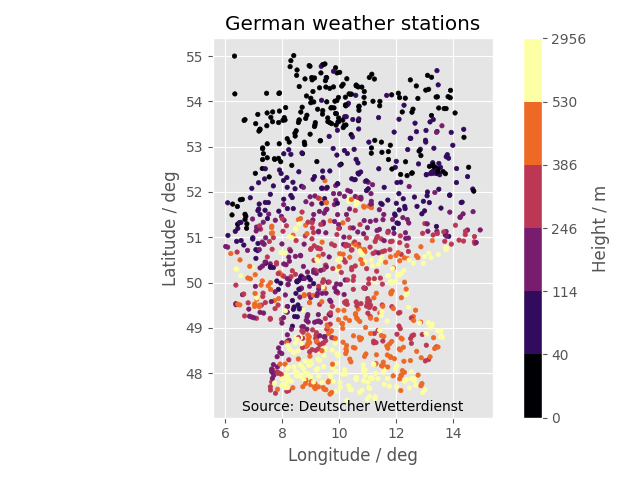
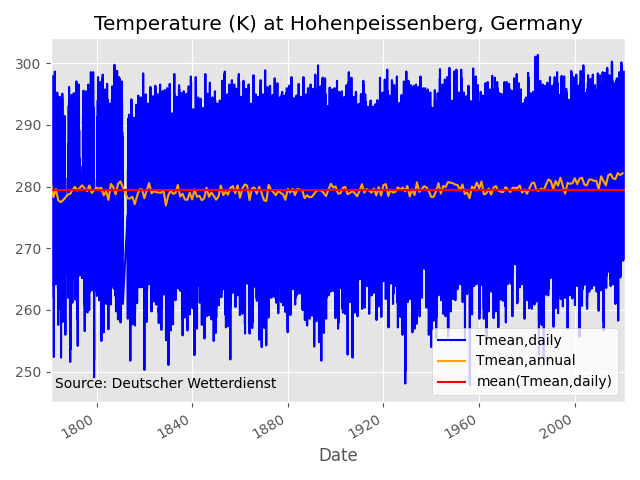
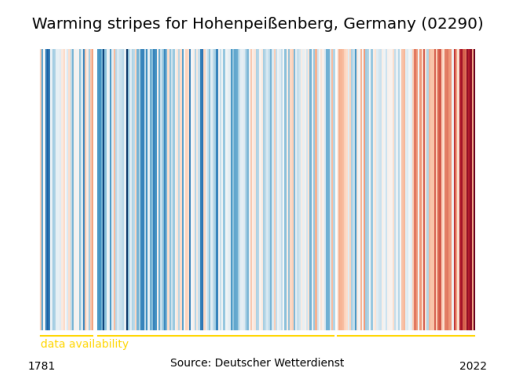
"What do we want? Climate Justice! When do we want it? Now!" - FFF
Warning
This library is a work in progress! Breaking changes should be expected until a 1.0 release, so version pinning is recommended.

Welcome to Wetterdienst, your friendly weather service library for Python.
We are a group of like-minded people trying to make access to weather data in Python feel like a warm summer breeze,
similar to other projects like rdwd for the R language, which originally drew our
interest in this project. Our long-term goal is to provide access to multiple weather services as well as other related
agencies such as river measurements. With wetterdienst we try to use modern Python technologies all over the place.
The library is based on polars (we <3 pandas, it is still part of
some IO processes) across the board, uses uv for package administration and GitHub
Actions for all things CI. Our users are an important part of the development as we are not currently using the data we
are providing and only implement what we think would be the best. Therefore, contributions and feedback whether it be
data related or library related are very welcome! Just hand in a PR or Issue if you think we should include a new
feature or data source.
For an overview of the data we have currently made available and under which license it is published take a look at the data section. Detailed information on datasets and parameters is given at the coverage subsection. Licenses and usage requirements may differ for each provider so check this out before including the data in your project to be sure that you fulfill copyright requirements!
For a closer look on the DWD data, you can use
the interactive map
or the table provided by the rdwd package.
parameters, periods, start date, end dateThe modern app provides an interactive interface for exploring weather data:
Visit the live instance at wetterdienst.eobs.org
Via PyPi (standard):
pip install wetterdienst
Via Github (most recent):
pip install git+https://github.com/earthobservations/wetterdienst
There are some extras available for wetterdienst. Use them like:
pip install wetterdienst[sql]
To check the installation, invoke:
wetterdienst --help
Docker images for each stable release will get pushed to GitHub Container Registry.
wetterdienst serves a full environment, including all the optional dependencies of Wetterdienst.
Pull the Docker image:
docker pull ghcr.io/earthobservations/wetterdienst
Use the latest stable version of wetterdienst:
$ docker run -ti ghcr.io/earthobservations/wetterdienst
Python 3.8.5 (default, Sep 10 2020, 16:58:22)
[GCC 8.3.0] on linux
import wetterdienst

wetterdienst.__version__
The wetterdienst command is also available:
# Make an alias to use it conveniently from your shell.
alias wetterdienst='docker run -ti ghcr.io/earthobservations/wetterdienst wetterdienst'

wetterdienst --help
wetterdienst --version
wetterdienst info
Running wetterdienst on Raspberry Pi, you need to install numpy and lxml prior to installing wetterdienst by running the following lines:
# not all installations may be required to get lxml running
sudo apt-get install gfortran
sudo apt-get install libopenblas-base
sudo apt-get install libopenblas-dev
sudo apt-get install libatlas-base-dev
sudo apt-get install python3-lxml
Additionally expanding the Swap to 2048 mb may be required and can be done via swap-file:
sudo nano /etc/dphys-swapfile
Thanks chr-sto for reporting back to us!
Get historical climate summary for two German stations between 1990 and 2020
from wetterdienst import Settings
from wetterdienst.provider.dwd.observation import DwdObservationRequest

settings = Settings(  # default
    ts_shape="long",  # tidy data
    ts_humanize=True,  # humanized parameters
    ts_convert_units=True  # convert values to SI units
)

request = DwdObservationRequest(
    parameters=[
        ("daily", "climate_summary", "precipitation_height"),
    ],
    start_date="2002-08-11",  # if not given timezone defaulted to UTC
    end_date="2002-08-13",  # if not given timezone defaulted to UTC
    settings=settings
).filter_by_station_id(station_id=(5779,))

stations = request.df
stations.head()
# ┌────────────┬─────────────────┬────────────┬─────────────────────────┬───┬───────────┬────────┬──────────────────────┬─────────┐
# │ resolution ┆ dataset         ┆ station_id ┆ start_date              ┆ … ┆ longitude ┆ height ┆ name                 ┆ state   │
# │ ---        ┆ ---             ┆ ---        ┆ ---                     ┆   ┆ ---       ┆ ---    ┆ ---                  ┆ ---     │
# │ str        ┆ str             ┆ str        ┆ datetime[μs, UTC]       ┆   ┆ f64       ┆ f64    ┆ str                  ┆ str     │
# ╞════════════╪═════════════════╪════════════╪═════════════════════════╪═══╪═══════════╪════════╪══════════════════════╪═════════╡
# │ daily      ┆ climate_summary ┆ 05779      ┆ 1971-01-01 00:00:00 UTC ┆ … ┆ 13.7516   ┆ 877.0  ┆ Zinnwald-Georgenfeld ┆ Sachsen │
# └────────────┴─────────────────┴────────────┴─────────────────────────┴───┴───────────┴────────┴──────────────────────┴─────────┘

values = request.values.all().df
values.head()
# ┌────────────┬────────────┬─────────────────┬──────────────────────┬─────────────────────────┬───────┬─────────┐
# │ station_id ┆ resolution ┆ dataset         ┆ parameter            ┆ date                    ┆ value ┆ quality │
# │ ---        ┆ ---        ┆ ---             ┆ ---                  ┆ ---                     ┆ ---   ┆ ---     │
# │ enum       ┆ enum       ┆ enum            ┆ enum                 ┆ datetime[μs, UTC]       ┆ f64   ┆ f64     │
# ╞════════════╪════════════╪═════════════════╪══════════════════════╪═════════════════════════╪═══════╪═════════╡
# │ 05779      ┆ daily      ┆ climate_summary ┆ precipitation_height ┆ 2002-08-11 00:00:00 UTC ┆ 67.9  ┆ 10.0    │
# │ 05779      ┆ daily      ┆ climate_summary ┆ precipitation_height ┆ 2002-08-12 00:00:00 UTC ┆ 312.0 ┆ 10.0    │
# │ 05779      ┆ daily      ┆ climate_summary ┆ precipitation_height ┆ 2002-08-13 00:00:00 UTC ┆ 26.3  ┆ 10.0    │
# └────────────┴────────────┴─────────────────┴──────────────────────┴─────────────────────────┴───────┴─────────┘

# to get a pandas DataFrame and e.g. create some matplotlib plots
values.to_pandas()
# Get list of all stations for daily climate summary data in JSON format
wetterdienst stations --provider=dwd --network=observation --parameters=daily/kl --all

# Get daily climate summary data for specific stations
wetterdienst values --provider=dwd --network=observation --parameters=daily/kl --station=1048,4411
Checkout examples for more examples.
We want to acknowledge all environmental agencies which provide their data open and free of charge first and foremost for the sake of endless research possibilities.
We want to acknowledge all contributors for being part of the improvements to this library that make it better and better every day.
Documentation: https://wetterdienst.readthedocs.io/
Examples (runnable scripts): https://github.com/earthobservations/wetterdienst/tree/main/examples
Benchmarks: https://github.com/earthobservations/wetterdienst/tree/main/benchmarks
Special thanks to the kind people at JetBrains s.r.o. for supporting us with excellent development tooling.
more like this
Advanced, modular, coupled geomorpohology simulator for real-time procedural terrain generation.
🧠 A simple command-line client for the Perplexity API. Ask questions and receive answers directly from the terminal! 🚀🚀🚀
search projects, people, and tags