meine
meine 🌒 - A CLI file manager and system utility built with Textual. It combines intuitive command parsing with rich t…
Python★ 50
like lazygit/lazydocker but for slurm
 hill
hillgit clone https://github.com/hill/lazyslurm.githill/lazyslurm
A terminal UI for Slurm. Like lazygit, but for HPC clusters.

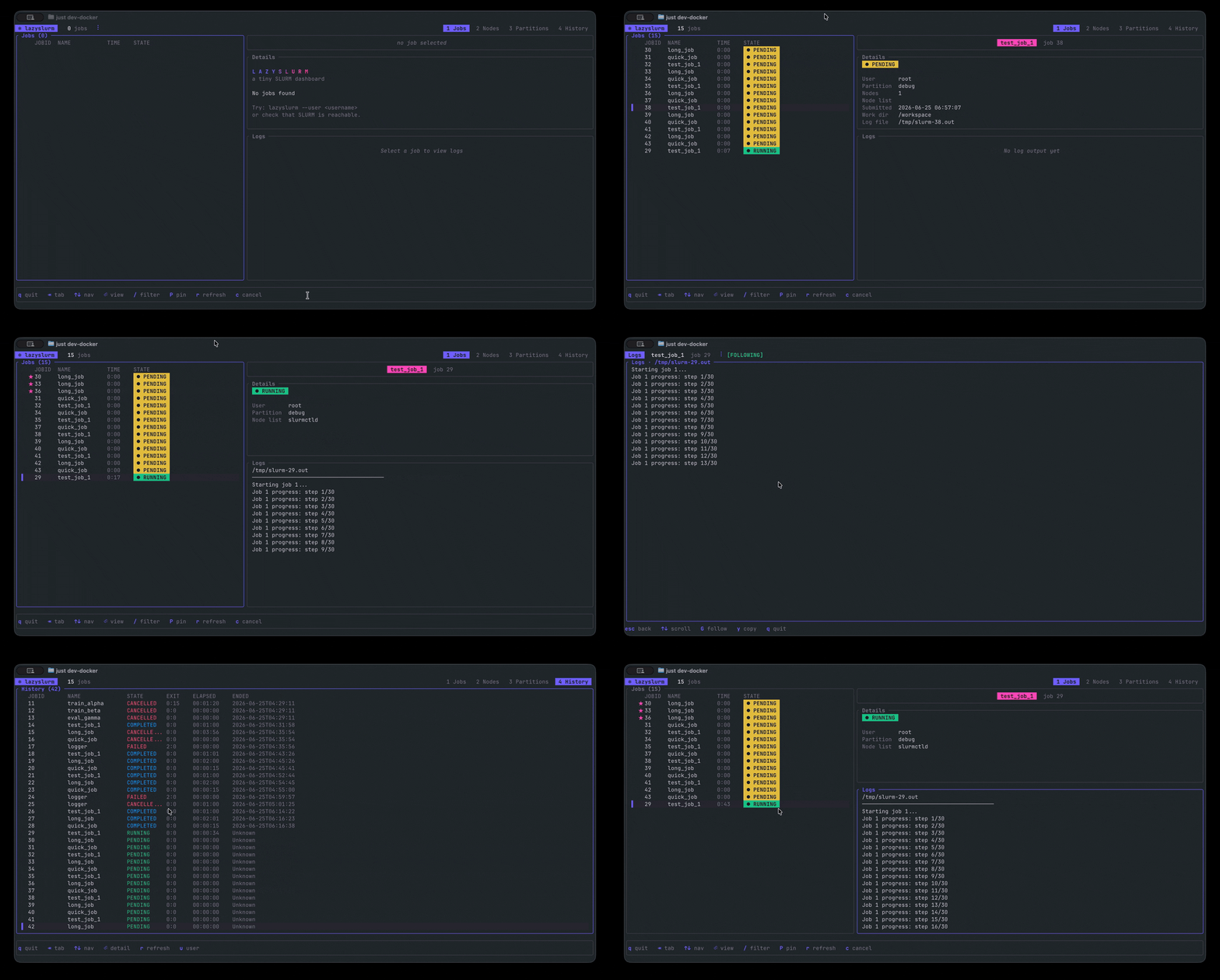
Slurm's CLI is powerful but clunky for monitoring. This gives you the lazygit experience for your cluster. Built in Rust with ratatui and released as a single binary.
sacct with detailsDownload the latest binary for your platform from GitHub Releases:
# Linux x64 (glibc)
curl -L https://github.com/hill/lazyslurm/releases/latest/download/lazyslurm-x86_64-unknown-linux-gnu.tar.gz | tar xz
sudo mv lazyslurm /usr/local/bin/

# Linux x64 (static musl build, best for older cluster login nodes)
curl -L https://github.com/hill/lazyslurm/releases/latest/download/lazyslurm-x86_64-unknown-linux-musl.tar.gz | tar xz
sudo mv lazyslurm /usr/local/bin/

# macOS (Apple Silicon)
curl -L https://github.com/hill/lazyslurm/releases/latest/download/lazyslurm-aarch64-apple-darwin.tar.gz | tar xz
sudo mv lazyslurm /usr/local/bin/

# macOS (Intel)
curl -L https://github.com/hill/lazyslurm/releases/latest/download/lazyslurm-x86_64-apple-darwin.tar.gz | tar xz
sudo mv lazyslurm /usr/local/bin/
Windows builds (lazyslurm-x86_64-pc-windows-msvc.zip) are on the releases page.
brew install hill/tap/lazyslurm
If you have Rust installed:
cargo install lazyslurm
gah install hill/lazyslurm
# Monitor all jobs for the current user
lazyslurm

# Filter to a specific user
lazyslurm --user username

# Filter to a specific partition
lazyslurm --partition gpu

# Start in a different theme
lazyslurm --theme gruvbox-dark
The Jobs tab works without any extra setup. The Nodes and Partitions tabs use sinfo, and History uses sacct (which needs Slurm accounting enabled on the cluster).
Global
| Key | Action |
|---|---|
q / Ctrl+C |
Quit |
Tab / Shift+Tab |
Switch tabs |
1–5 |
Jump to a tab |
↑/↓ or j/k |
Navigate the current list |
r |
Refresh |
u |
Filter by user |
T |
Pick a theme |
Jobs tab
| Key | Action |
|---|---|
←/→ or h/l |
Move focus between panels |
Enter |
Fullscreen the focused pane |
/ |
Filter the list by name or id |
P |
Pin / unpin the selected job |
c |
Cancel the selected job |
y |
Raw log view (with the Logs pane focused) |
History tab
| Key | Action |
|---|---|
Enter |
Open the job detail view |
y |
Raw log view (in the detail view) |
Log views
| Key | Action |
|---|---|
G / g |
Follow the tail |
y |
Open the raw view, then drag-select to copy |
Esc |
Back |
Press T to open the theme picker. Moving the selection applies the theme straight away so you can see it, Enter keeps it, Esc puts the old one back.
Nine themes ship in the box:
lazyslurm (the default), gruvbox-dark, gruvbox-light, catppuccin-mocha, catppuccin-latte, nord, dracula, tokyonight, tokyonight-day.
Confirming a choice in the picker writes it to ~/.config/lazyslurm/config.toml, which you can also edit by hand:
theme = "gruvbox-dark"
A --theme flag beats the LAZYSLURM_THEME environment variable, which beats the config file. lazyslurm --list-themes prints what is available.
The default theme leaves the background alone so it sits over whatever your terminal is doing, transparency included. The light themes have to paint an opaque background, or their text would land on a dark terminal.
Drop a TOML file into ~/.config/lazyslurm/themes/. The filename is the theme name, so ~/.config/lazyslurm/themes/solarised.toml shows up in the picker as solarised. Naming a file after a built-in retunes that built-in in place.
The quickest start is to dump one you already like and edit it:
lazyslurm --theme nord --print-theme > ~/.config/lazyslurm/themes/mine.toml
Or set extends and override only what you want to change:
extends = "nord"          # any built-in name; everything unset is inherited
accent     = "#268BD2"    # focused borders, key hints, brand badge
accent_alt = "#D33682"    # job-name pill, update badge, pinned star
bg         = "#002B36"    # omit to inherit, or "reset" to stay transparent
Every slot:
| Key | Used for |
|---|---|
accent |
Focused borders and titles, key hints, brand badge, cursors |
accent_alt |
Job-name pill, update badge, pinned star |
running pending completed failed cancelled |
Job state badges and bars |
fg |
Primary text |
muted |
Labels, placeholders, hint text |
border |
Unfocused borders and separators |
badge_fg |
Text drawn on a filled badge, so usually the theme's own background tone |
select_bg |
Selected row background |
column_bg |
Focused column background in the fullscreen table |
bg |
The canvas. Omit it to leave your terminal's background showing |
Colours can be hex (#268BD2), a name (light-blue, red), or a 256-colour index (0–255). Named and low-indexed colours defer to your terminal's own palette.
Requires Docker and just. The dev container runs a full Slurm install with accounting (slurmdbd + MariaDB), so every tab works locally.
# Build and start the Slurm container
just slurm_up

# Get a shell inside it
just slurm_shell

# Inside the container (your code is mounted at /workspace)
cargo run

# Submit some test jobs
just slurm_populate

# Inspect the cluster
just slurm_status    # squeue + sinfo
just slurm_prio      # sprio priority breakdown
just slurm_share     # sshare fairshare usage
just slurm_clear_jobs
Your source is mounted into the container, so changes are picked up immediately.
MIT
more like this
meine 🌒 - A CLI file manager and system utility built with Textual. It combines intuitive command parsing with rich t…
search projects, people, and tags