AutomationShield
Arduino library and MATLAB/Simulink API for the AutomationShield Arduino expansion boards for control engineering educa…
C★ 51
Smart energy meter capable of monitoring up to 16 channels. Supports MQTT, REST API, Modbus TCP, InfluxDB, AWS IoT Core…
 jibrilsharafi
git clone https://github.com/jibrilsharafi/EnergyMe-Home.gitjibrilsharafi/EnergyMe-Home EnergyMe-Home
Available on our website and on Tindie

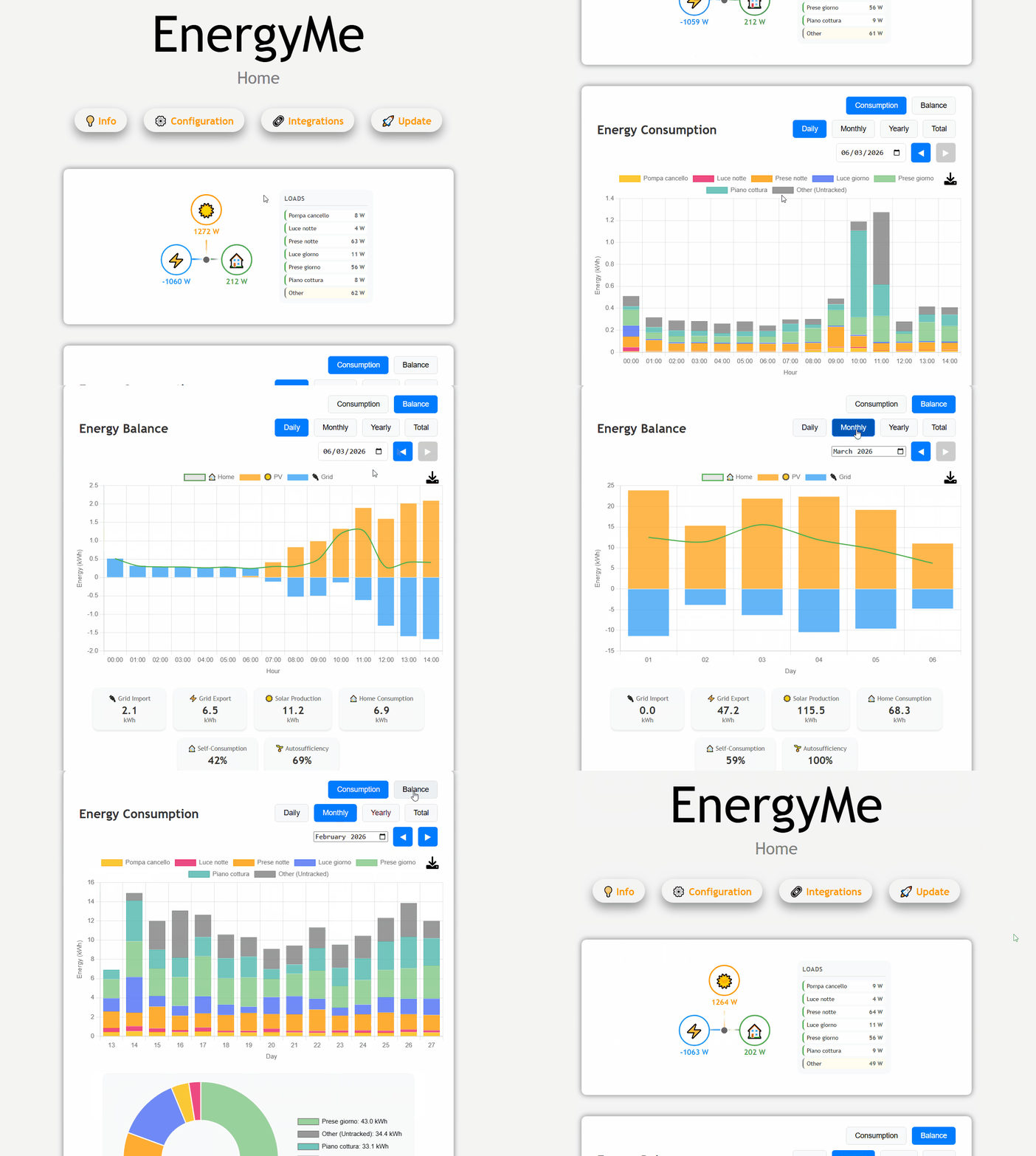
EnergyMe-Home is an open-source energy monitoring system for home use, capable of monitoring up to 16 circuits. It integrates with any platform through REST API, MQTT, Modbus TCP, and InfluxDB.
Built for makers and DIY enthusiasts who want to track their home's energy consumption. The hardware uses ESP32-S3 and ADE7953 energy measurement IC, while the firmware is written in C++ with PlatformIO and Arduino framework. You can build and customize it yourself - all hardware designs and software are open-source. Prefer it ready to go? Grab a pre-assembled unit.
A demo speaks more than 1000 words: try the demo dashboard!
Join the community! Head over to GitHub Discussions - ask questions, share your builds and dashboards, suggest features, and exchange integration tips. It's the home for everyone building, installing, or tinkering with EnergyMe-Home
EnergyMe-Home is compatible with various electrical systems worldwide:
| System Type | Voltage | Configuration | Supported |
|---|---|---|---|
| Single Phase | 230V | L + N | ✅ Europe, Asia, Africa, Oceania |
| Split Phase | 120V/240V | L1 + L2 + N | ✅ North America residential |
| Split Phase | 120V/240V | L1 + L2 (no N) | ✅ Old electrical systems |
| Three Phase | 400V/230V | 3L + N | ❕ Europe commercial/industrial (derived voltages) |
| Three Phase | 208V/120V | 3L + N | ❕ North America commercial (derived voltages) |
Current Transformers Supported:
Monitoring Capacity:
⚠️ Important: Installation requires working with your main electrical panel. Always consult a qualified electrician if you're not experienced with electrical installations. The user is responsible for ensuring compliance with local electrical codes and regulations, and assumes all risks associated with the installation and use of this device.
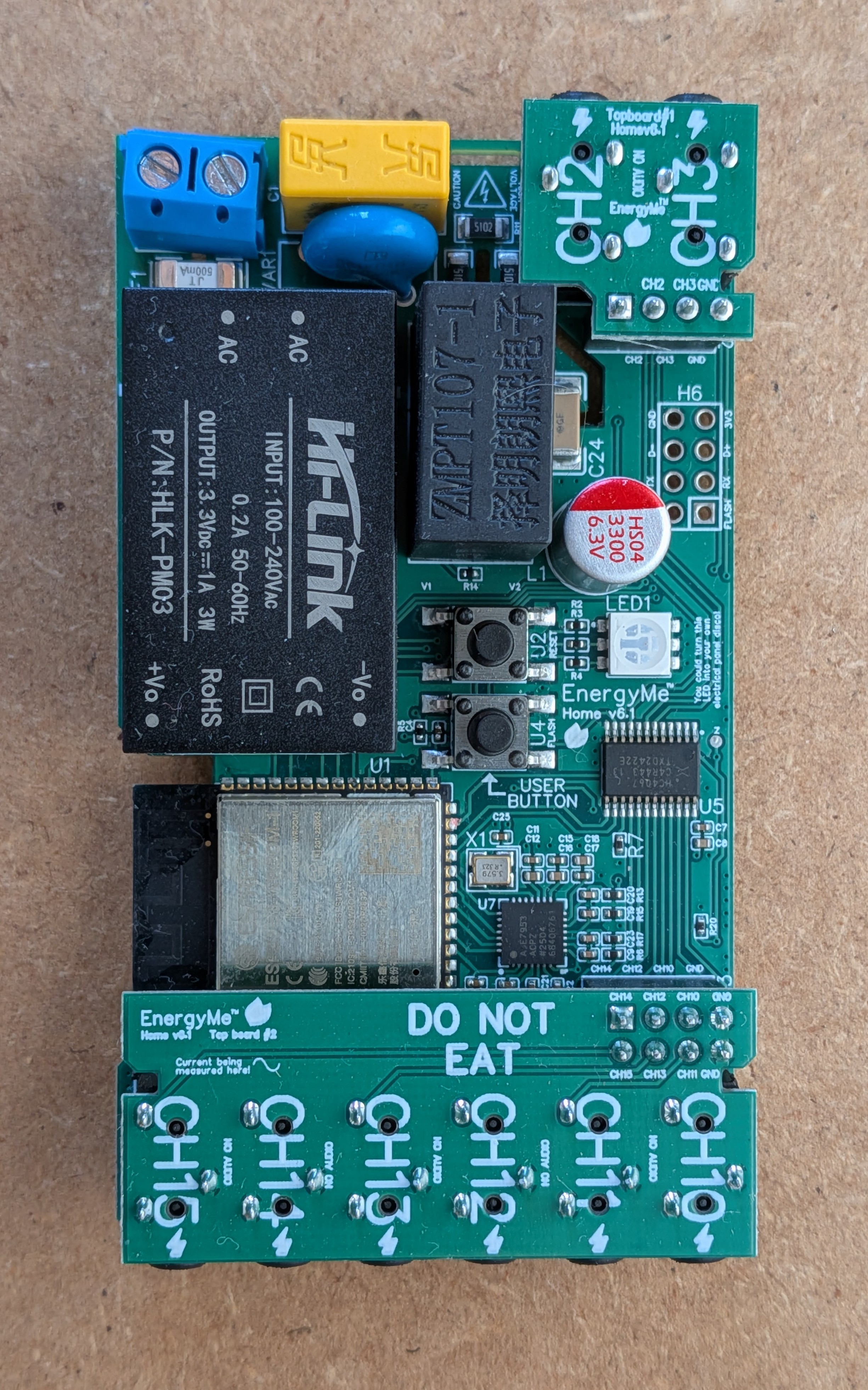
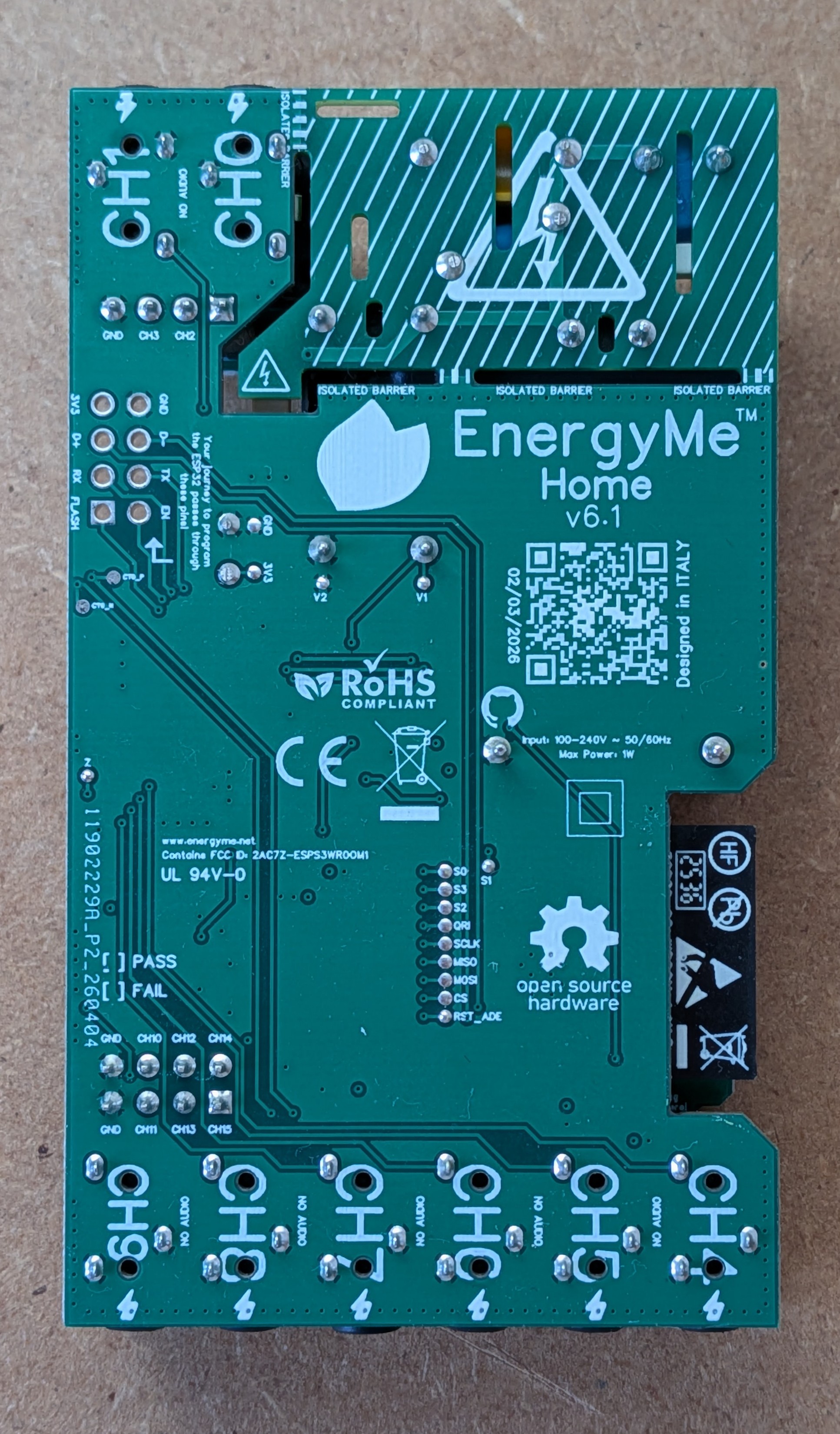
The hardware (currently at v6.1) consists of both the PCB design and the components used to build the energy monitoring system.
The key components include:
PCB schematics and BOMs are available in the hardware/pcb directory, while datasheets for key components are in the hardware/components directory. Additional hardware specifications and technical details can be found in the hardware/README.md, with a condensed one-page summary in the PCB & Firmware Datasheet.
The project is published on EasyEDA for easy access to the PCB design files. You can find the project on EasyEDA OSHWLab.
The firmware is built with C++ using the PlatformIO ecosystem and Arduino 3.x framework, with a task-based architecture using FreeRTOS.
Key Features:
energyme.local)For detailed architecture, implementation details, and API documentation, see source/README.md.
EnergyMe-Home offers multiple integration options:
For detailed integration guides and implementation details, see the source README.
EnergyMe-Home integrates with Home Assistant through a dedicated custom integration.
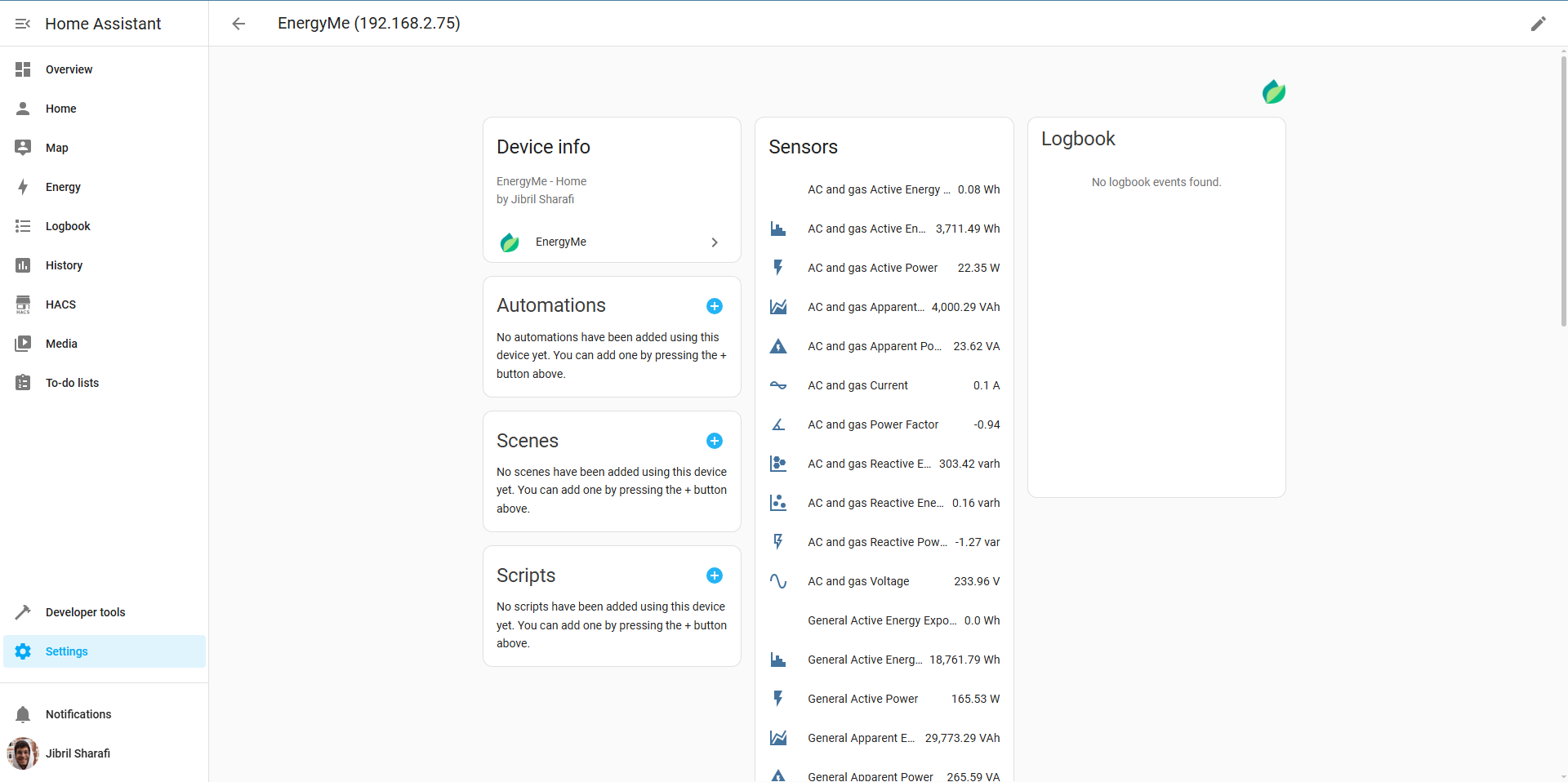
Get started at homeassistant-energyme.
hardware/pcb/main_board/, hardware/pcb/top_board_1/, and hardware/pcb/top_board_2/http://energyme.local (default credentials: admin/energyme)For detailed build instructions and troubleshooting, see the manual.
Optional anonymous usage statistics sent once per boot: hashed device ID, firmware version, country/city (from public IP). Helps count active installations. No personal data or usage patterns collected. Disable in platformio.ini: set ENABLE_OPEN_SOURCE_TELEMETRY=0.
Firmware binaries and per-version release notes are published on GitHub Releases. See CHANGELOG.md for an index of versions and links to the corresponding pull requests.
Contributions are welcome! Please read the contributing guidelines for more information.
This project contains both software and hardware components:
See the respective license files for full details.
more like this
Arduino library and MATLAB/Simulink API for the AutomationShield Arduino expansion boards for control engineering educa…
search projects, people, and tags