iterated-dynamics
Iterated Dynamics is a fractal renderer with support for many fractal types and extensive context-sensitive help.
C++★ 50
Fast mandelbrot set renderer using goroutines
 joweich
git clone https://github.com/joweich/fractals.gitjoweich/fractalsfractals is a customizable renderer for the Mandelbrot set written in Go. It uses Go's goroutines to achieve high performance.
git clone https://github.com/joweich/fractals.git
cd fractals
go build
./fractals -h  # to see list of available customizations
./fractals -height 1000 -width 1000 # fractals.exe for Windows systems
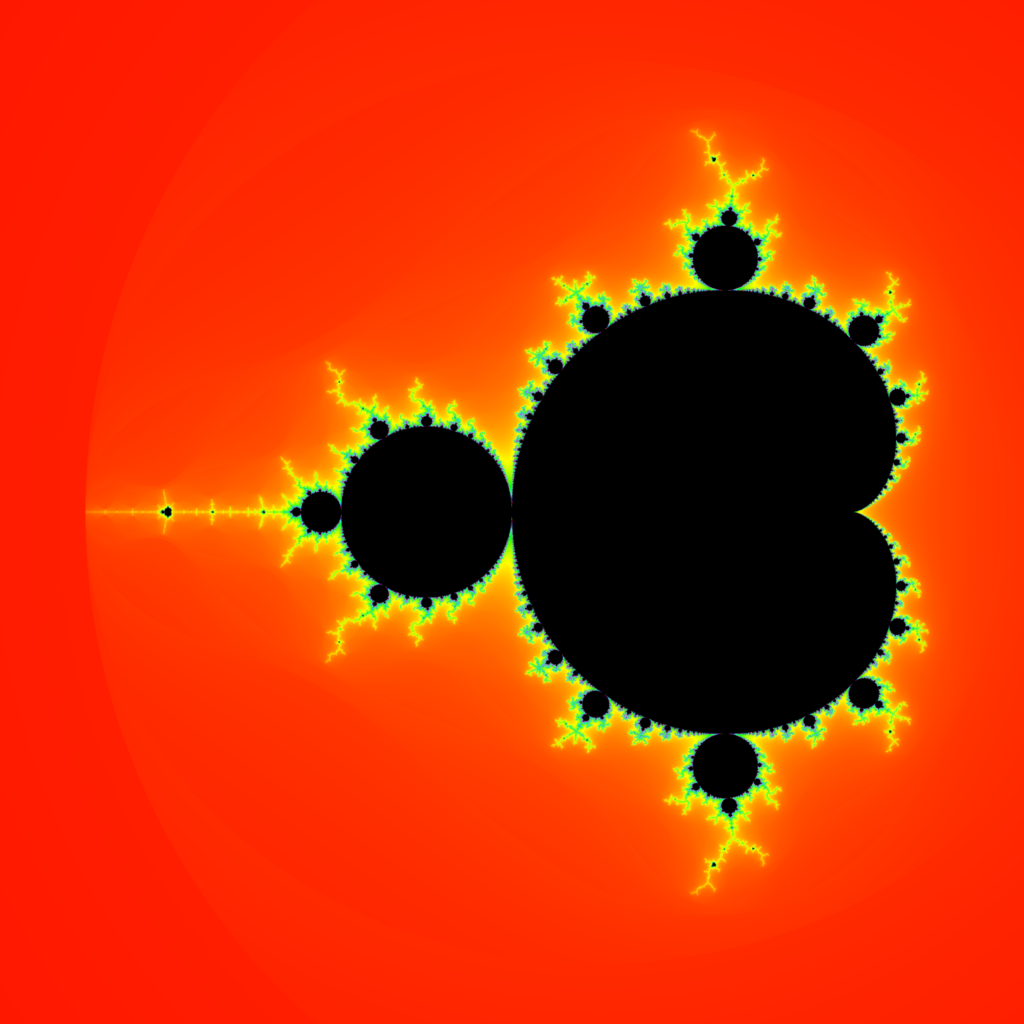
|
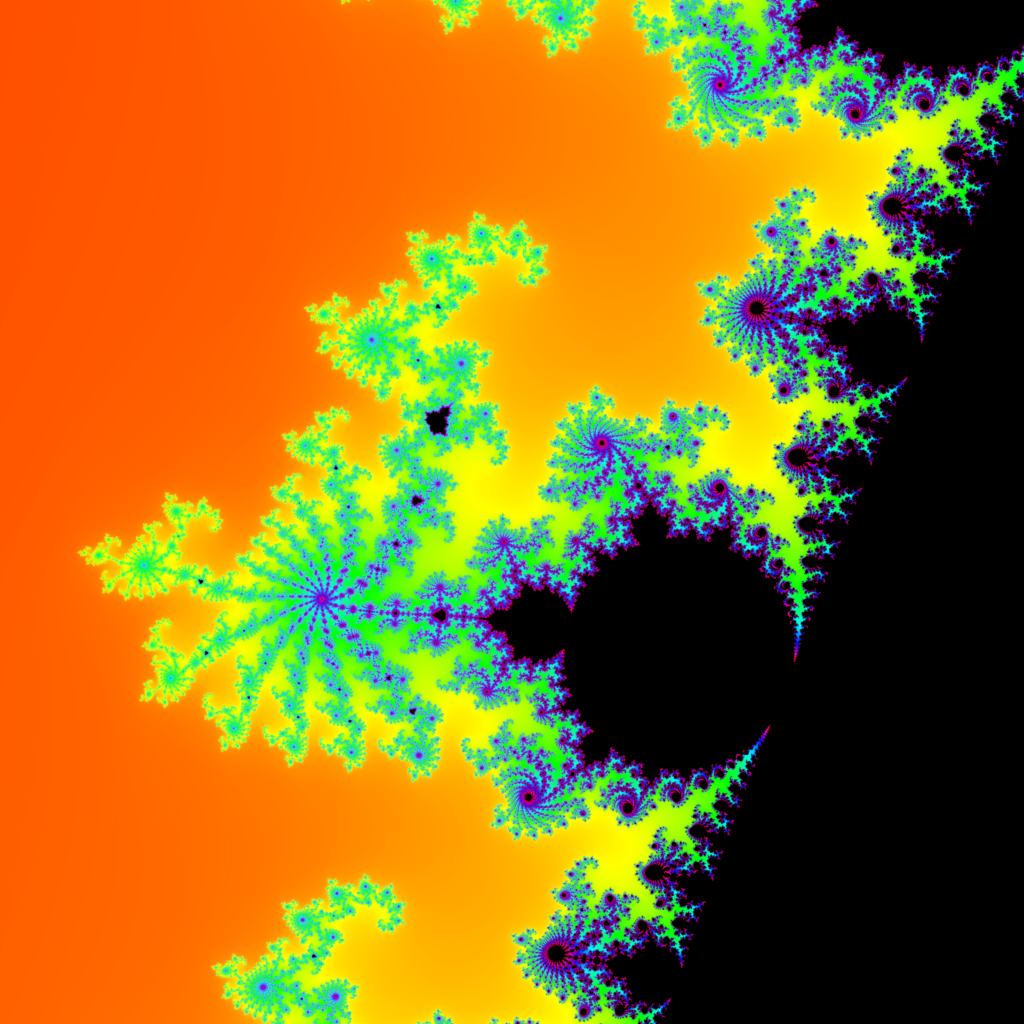
|
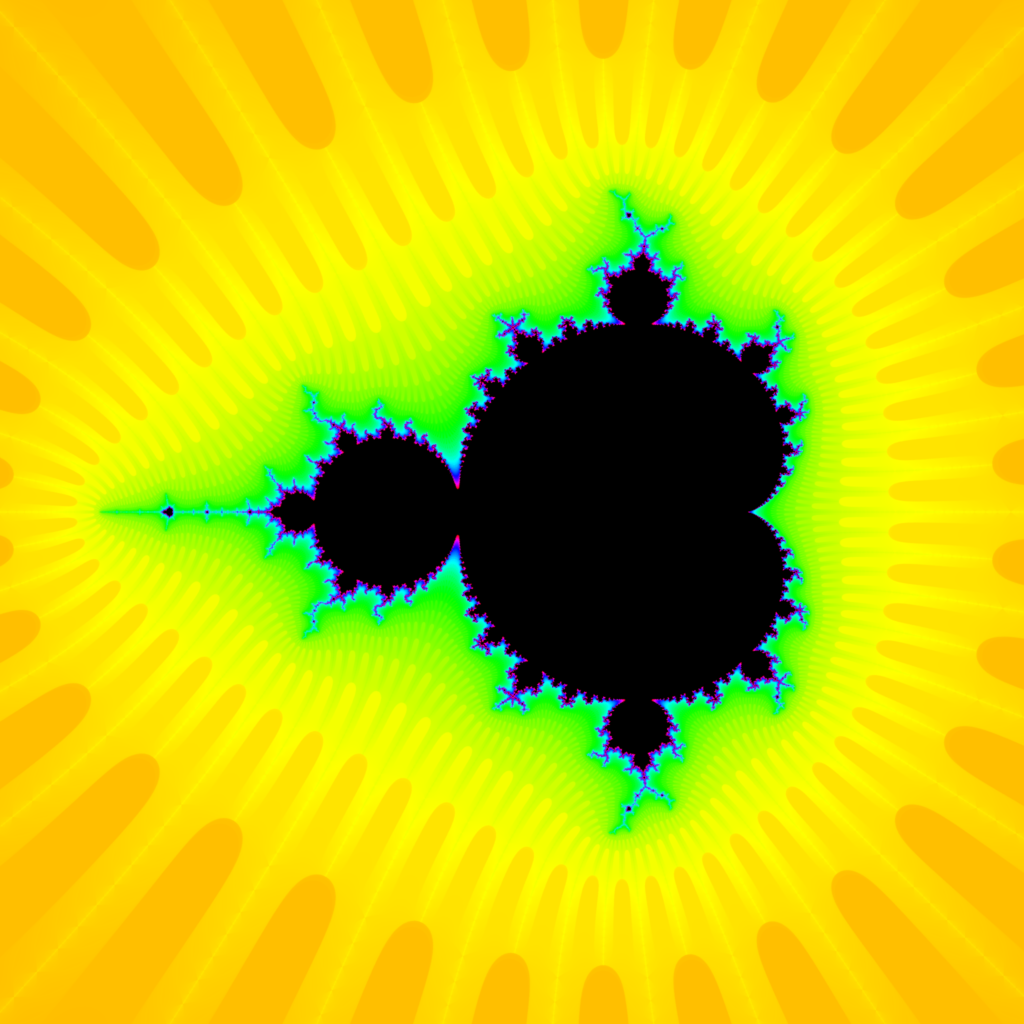
|
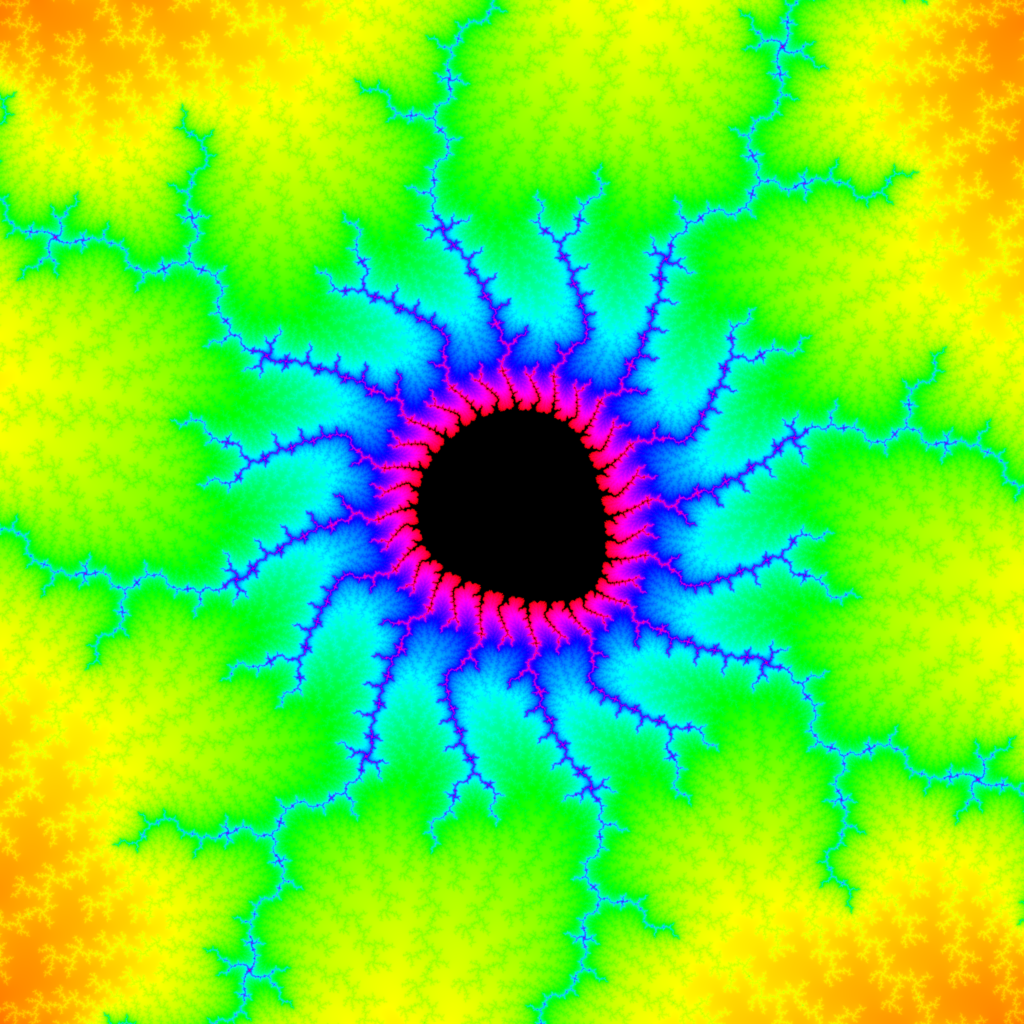
|
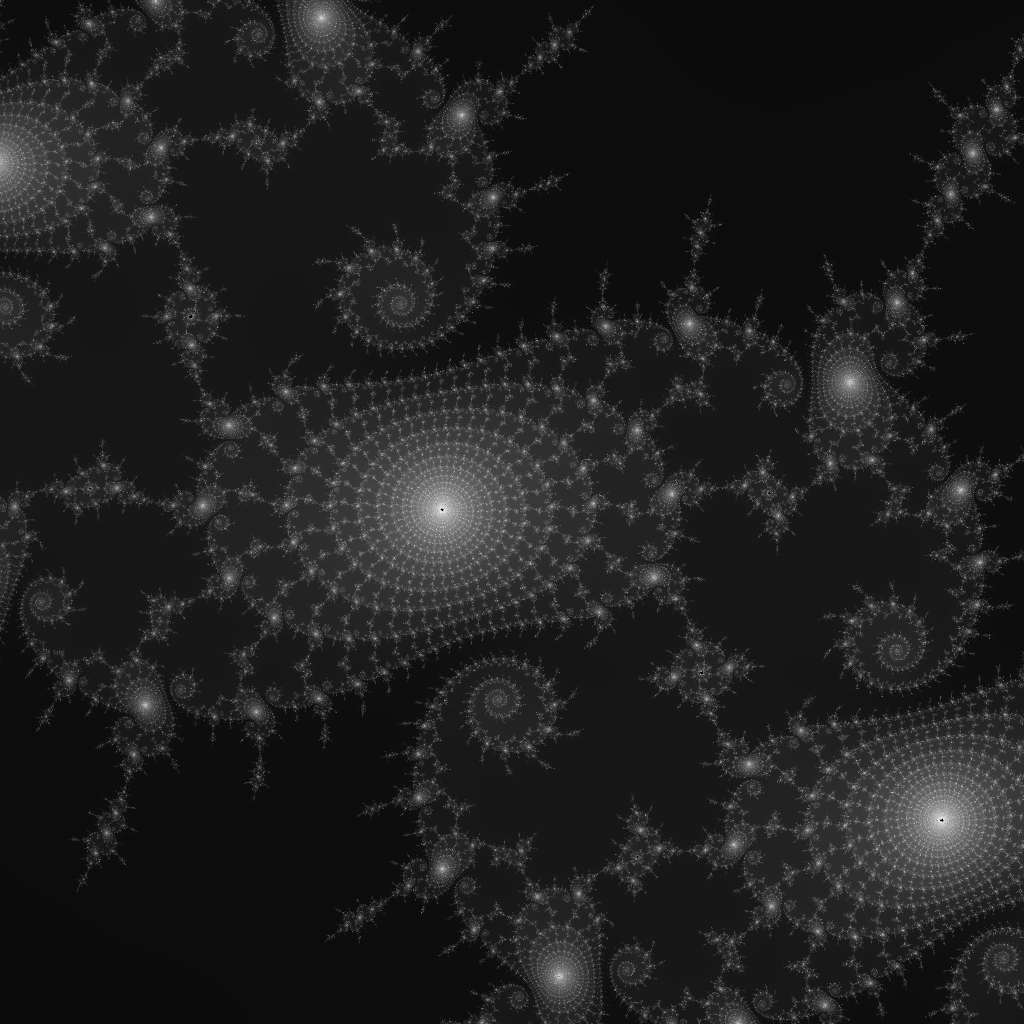
|
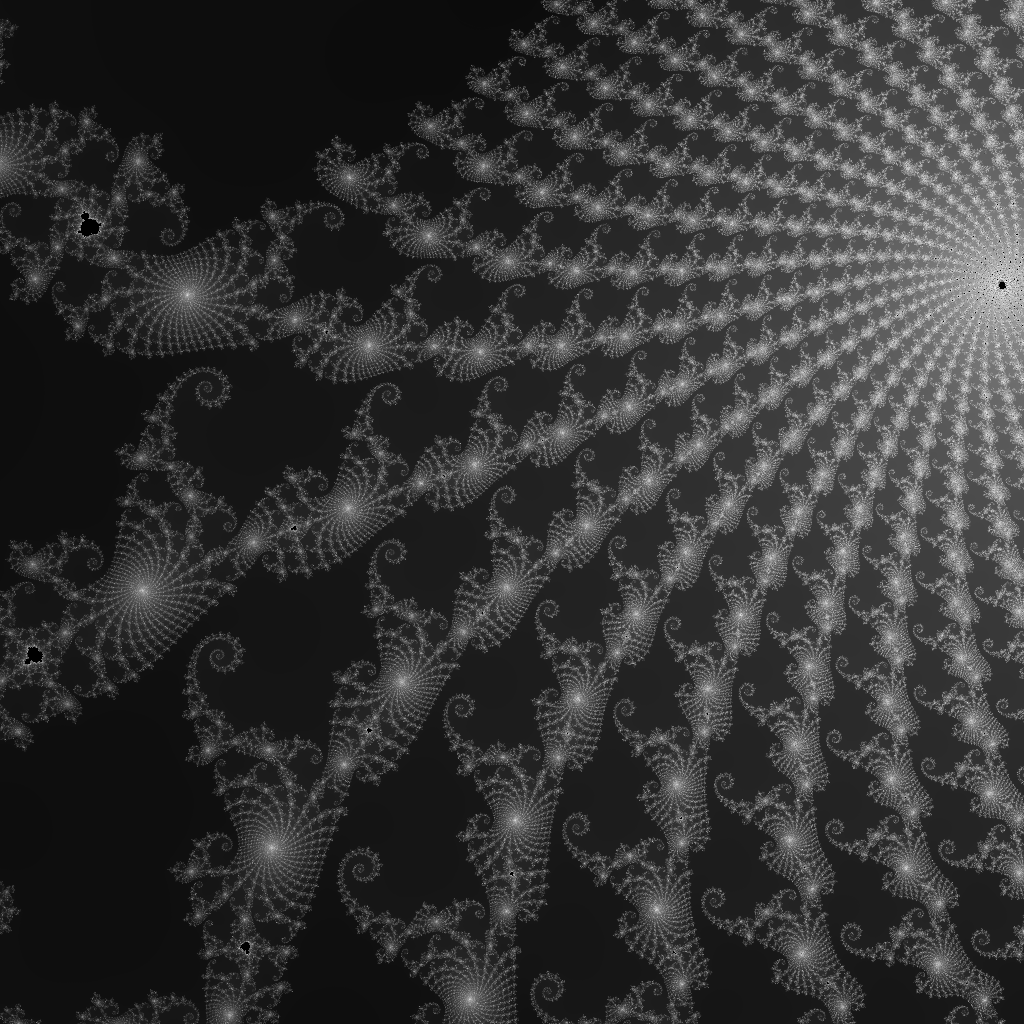
|
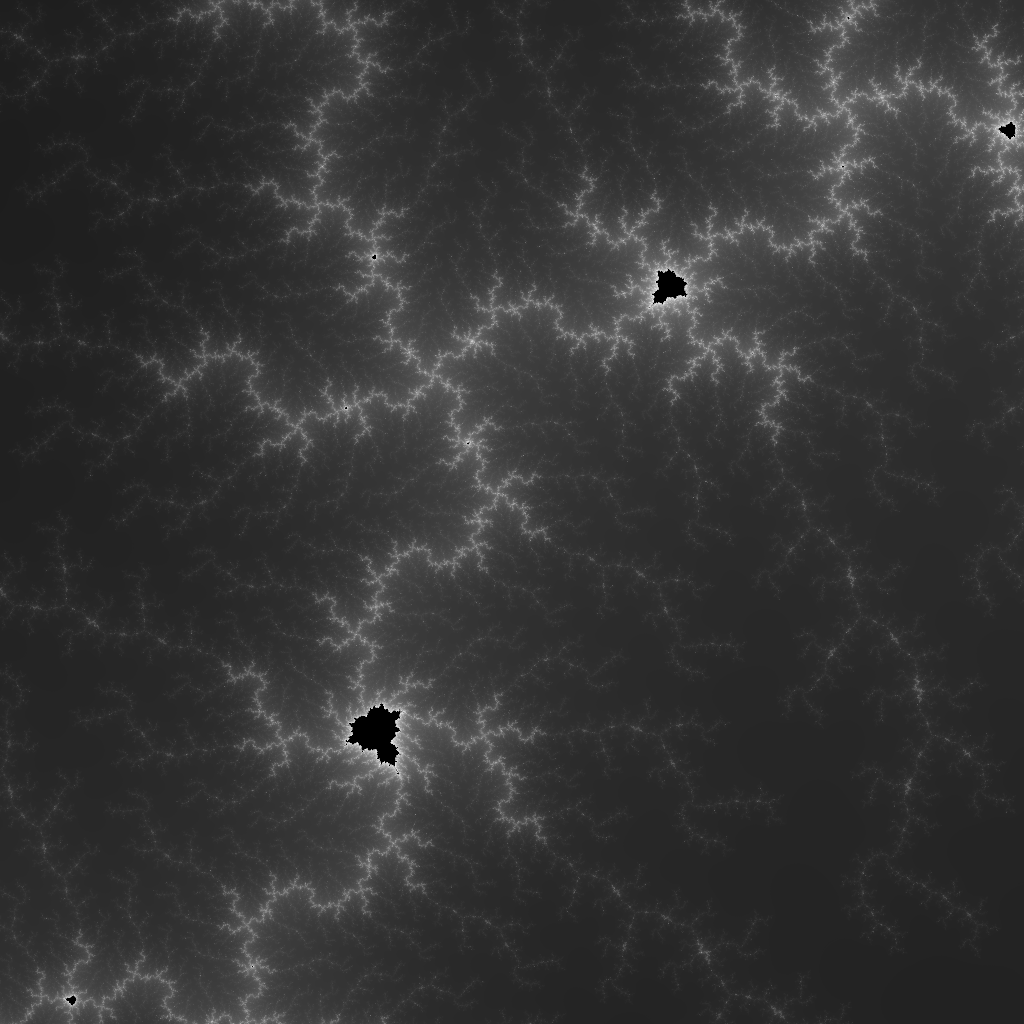
|
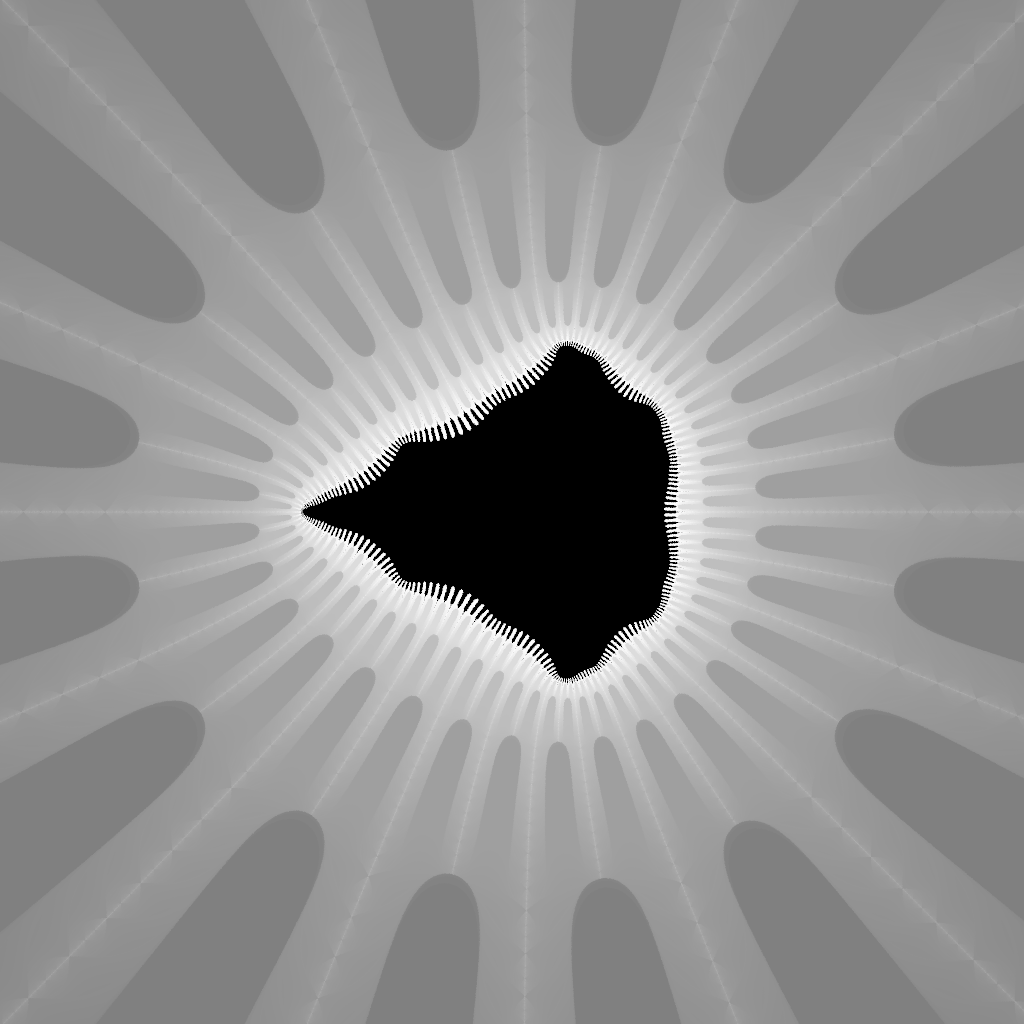
|
The Mandelbrot set is defined as the set of complex numbers $c$ for which the series
$$z_{n+1} = z²_n + c$$
is bounded for all $n ≥ 0$. In other words, $c$ is part of the Mandelbrot set if $z_n$ does not approach infinity. This is equivalent to the magnitude $|z_n| ≤ 2$ for all $n ≥ 0$.
The image is interpreted as complex plane, i.e. the horizontal axis being the real part and the vertical axis representing the complex part of $c$.
The colors are determined by the so-called naïve escape time algorithm. It's as simple as that: A pixel is painted in a predefined color (often black) if it's in the set and will have another color if it's not. The color is determined by the number of iterations $n$ needed for $z_n$ to exceed $|z_n| = 2$. This $n$ is the escape time, and $|z_n| ≥ 2$ is the escape condition. In our implementation, this is done via the hue parameter in the HSL color model for non-grayscale images, and the lightness parameter for grayscale images.
Each row of the image is added as a job to a channel. These jobs are distributed using goroutines (lightweight threads managed by the Go runtime) that are spun off by consuming from the channel until it's empty.
more like this
Iterated Dynamics is a fractal renderer with support for many fractal types and extensive context-sensitive help.
search projects, people, and tags