perplexity-cli
🧠 A simple command-line client for the Perplexity API. Ask questions and receive answers directly from the terminal! 🚀🚀🚀
Python★ 176
Open-source, self-hosted file-processing tool. Convert, compress, OCR, transcribe & run local AI across image, video, a…
 snapotter-hq
Open-source, self-hosted file-processing infrastructure. Convert, compress, OCR, transcribe, strip metadata, and run local AI across image, video, audio, PDF, and documents, through a UI, REST API, and pipelines. Your files never leave your network.
The one self-hosted stack that replaces CloudConvert, Smallpdf, TinyPNG, TinyWow, and Otter.ai. 200+ tools across five modalities, on hardware you own.
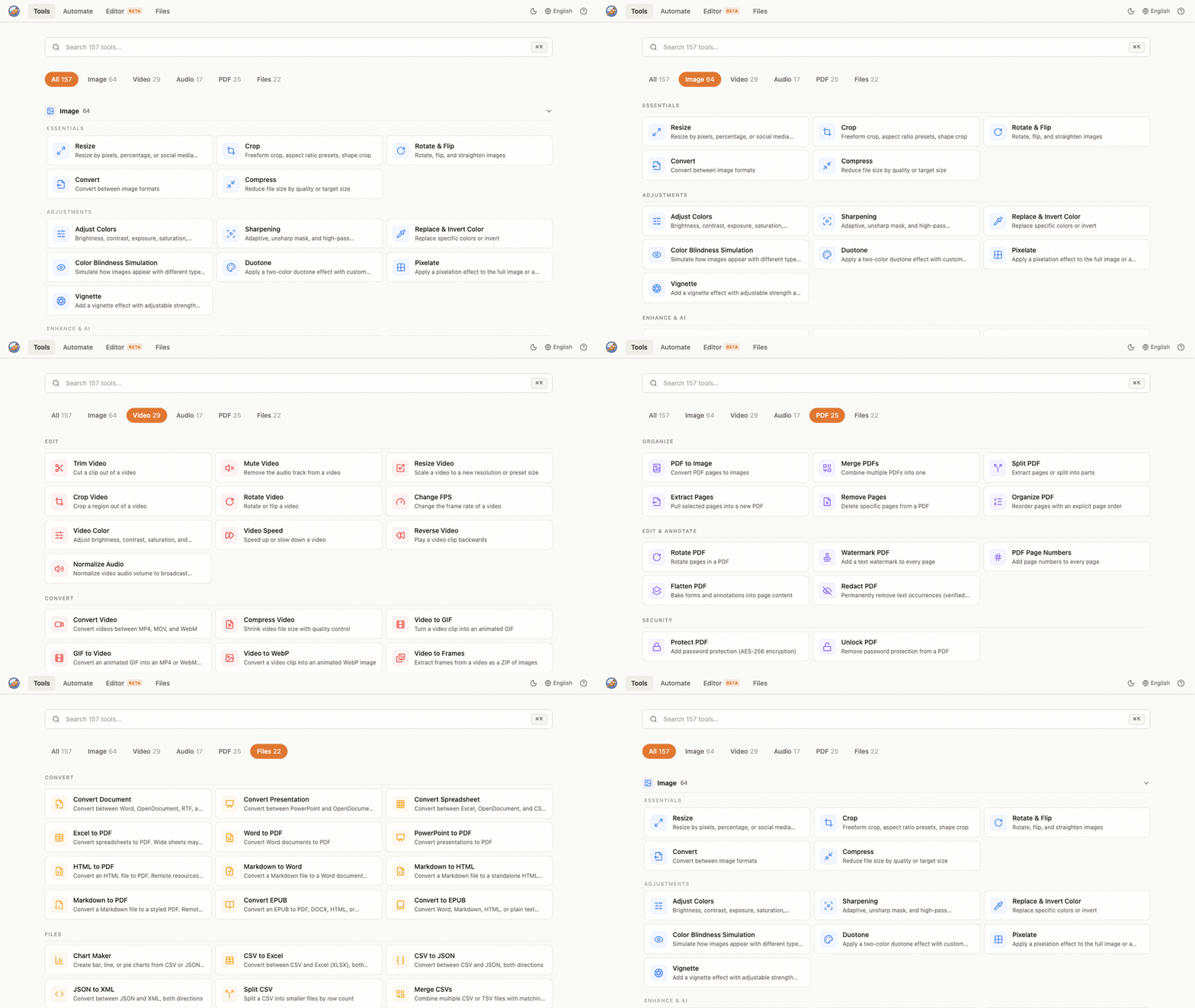
Stirling-PDF stops at PDFs. ConvertX stops at conversions. SnapOtter runs all five, and your files never leave your server. Edit images, convert video, transcribe audio, repair PDFs, batch your files: one Docker stack, on hardware you own.
One command, that's it.
docker run -d --name SnapOtter -p 1349:1349 -v SnapOtter-data:/data snapotter/snapotter:latest
Open http://localhost:1349 and log in with admin / admin. That's the whole install.
For the production Compose stack, NVIDIA GPU acceleration, and configuration, see Deployment below.
MAX_PIPELINE_STEPS). Import/export as JSON. Batch size is unlimited in the published image and 100 from a source build (MAX_BATCH_SIZE)/api/docsdocker run for a single-container quick start (embedded Postgres 17 + Redis 8), or the same Postgres 17 + Redis 8 as a Compose stack for production. No external SaaS dependenciesSNAPOTTER_ANALYTICS=off or at runtime with the in-app admin opt-out (Here's how to do it)The Quick Start one-liner above is all most people need. For production, run the 3-container Compose stack (app + Postgres 17 + Redis 8). Save this as compose.yaml:
services:
  snapotter:
    image: snapotter/snapotter:latest
    ports: ["1349:1349"]
    environment:
      DATABASE_URL: postgres://snapotter:snapotter@postgres:5432/snapotter
      REDIS_URL: redis://redis:6379
    volumes:
      - SnapOtter-data:/data
    depends_on: [postgres, redis]
    restart: unless-stopped
  postgres:
    image: postgres:17-alpine
    environment:
      POSTGRES_USER: snapotter
      # Change this for any non-local deployment.
      POSTGRES_PASSWORD: snapotter
      POSTGRES_DB: snapotter
    volumes: ["SnapOtter-pgdata:/var/lib/postgresql/data"]
    restart: unless-stopped
  redis:
    image: redis:8-alpine
    volumes: ["SnapOtter-redisdata:/data"]
    restart: unless-stopped
volumes:
  SnapOtter-data:
  SnapOtter-pgdata:
  SnapOtter-redisdata:
Then start the stack:
docker compose up -d
Use the GPU Compose file for NVIDIA CUDA-accelerated background removal, upscaling, and transcription. OCR deliberately uses the same portable CPU runtime on CPU-only and NVIDIA hosts. Intel/AMD iGPU acceleration through VA-API, Quick Sync, or OpenCL is not supported for AI inference today; those systems run AI tools on CPU. See Docker Tags for the GPU Compose example and benchmarks.
Default credentials:
| Field | Value |
|---|---|
| Username | admin |
| Password | admin |
You will be asked to change your password on first login.
For Docker Compose, persistent storage, and other setup options, see the Getting Started Guide. For NVIDIA CUDA acceleration and tag details, see Docker Tags.
We welcome bug reports, feature ideas, and pull requests. See CONTRIBUTING.md for the full guide, or jump in:
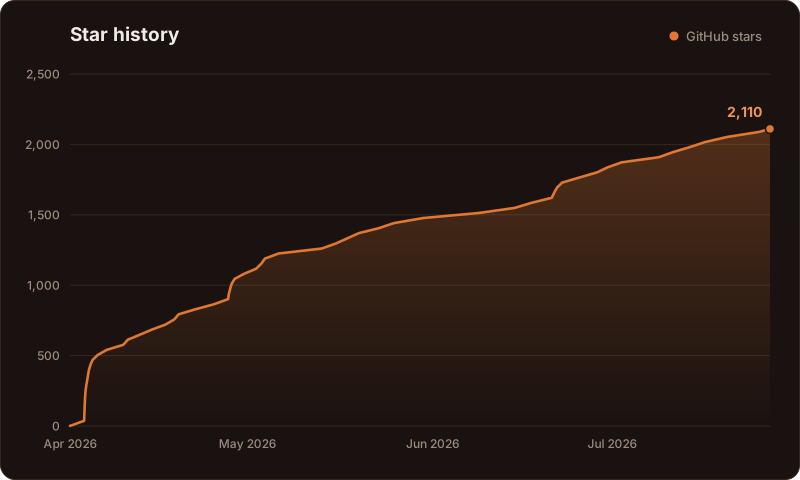
SnapOtter is built and maintained independently with no venture capital or corporate backing. Sponsorships fund infrastructure, keep releases flowing, and ensure the project stays free and open for everyone.
If SnapOtter has replaced a paid subscription or two in your workflow, a small sponsorship helps keep it that way:

This project is dual-licensed under the AGPLv3 and a commercial license.
See LICENSING.md for full details on the open-core boundary between AGPLv3 and commercial code.
more like this
🧠 A simple command-line client for the Perplexity API. Ask questions and receive answers directly from the terminal! 🚀🚀🚀
search projects, people, and tags